
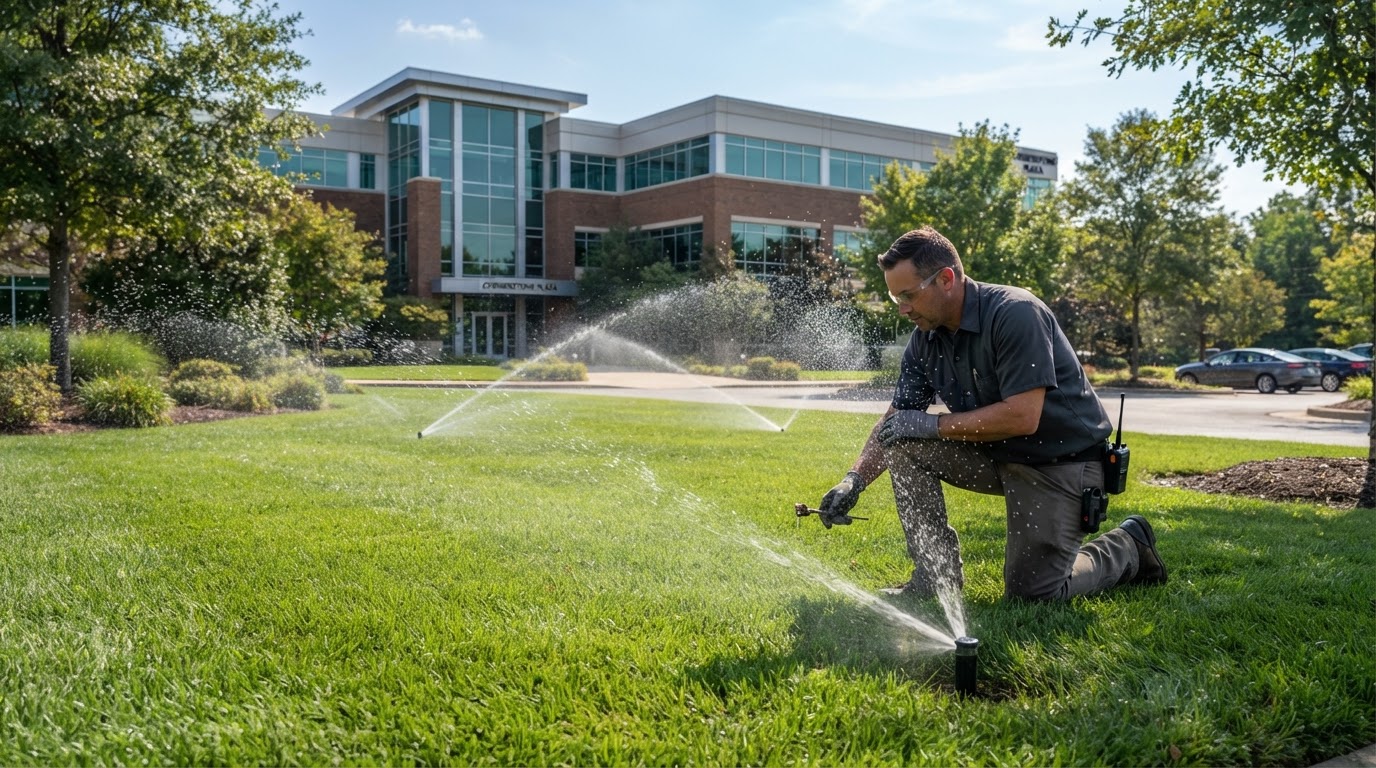
How to Audit Your Commercial Irrigation System Before It Costs You
A leaking irrigation head wastes water and money long before anyone notices. Here is how to audit your system and catch problems early.
Key Takeaways
- A leaking irrigation head wastes water and money long before anyone notices. A simple audit catches problems early.
- Walk every zone, check every head, and log what you find. The audit is the baseline for everything else.
- Compare your water bill to your irrigation schedule. A rising bill with no schedule change means a hidden leak.
- Document the audit and repeat it each season. Irrigation problems are seasonal, not one-time.
How to Audit Your Commercial Irrigation System Before It Costs You?
A commercial irrigation system is one of the largest hidden costs on a property. When it works, nobody notices. When it leaks, the water bill climbs quietly until someone sees it months later. An irrigation audit is a simple, systematic walk-through that catches problems before they become bills.
The audit takes an hour on most properties and pays for itself the first time it finds a single broken head or a zone running twice as long as it should.
What Should You Check at Each Irrigation Head?
Walk to every head in every zone. Look for four things: heads that are broken or missing, heads that are spraying the wrong direction (onto a wall or sidewalk instead of turf), heads that are clogged and not spraying at all, and heads that are sunken or tilted so they no longer pop up above the grass.
Log each problem by zone and head number. A simple spreadsheet with zone, head, and issue is enough. The point is to find everything in one pass, not to fix it on the spot.
How Do You Check the Controller Schedule?
Pull up the irrigation controller and review the schedule for each zone. Check the start time, the run time, and the days each zone runs. The most common waste is a zone set to run every day for 20 minutes when the turf only needs it twice a week for 10.
Compare the schedule to the season. A schedule that was right in July is wrong in October. If nobody adjusts the controller when the weather changes, the system overwaters for half the year.
How Do You Use the Water Bill to Find Hidden Leaks?
Pull the last 12 months of water bills and look at the usage, not just the cost. If usage rises in a month when the irrigation schedule has not changed, that is a red flag for a hidden leak, often underground where nobody can see it.
A sudden spike in usage that does not match a schedule change or a heat wave almost always means a broken pipe or a stuck valve. The water bill is the cheapest leak detector on the property.
What About Rain Sensors and Smart Controllers?
A rain sensor shuts off the system when it rains. If the sensor is broken or bypassed, the system waters in the rain, which is visible waste and a complaint magnet. Test the rain sensor by manually triggering it and confirming the controller pauses.
A smart controller adjusts the schedule based on local weather data. If the property has one, confirm it is connected and updating. A smart controller that lost its connection runs on the last schedule it had, which may be months out of date.
How Often Should You Audit the System?
Audit at the start of each season, four times a year. Spring startup, summer peak, fall wind-down, and winter shutdown. Each season has different problems. Spring catches winter damage. Summer catches heat stress and overwatering. Fall catches heads that need adjustment before winter. Winter confirms the system is drained and shut down.
Between seasonal audits, walk the property once a month during the growing season. A monthly walk catches the problems a quarterly audit would miss, like a head knocked by a mower or a zone that stopped working last week.
What Should the Audit Report Include?
The report should list every zone, every head, the issue found, the recommended fix, and the priority. A simple table is enough. Share it with your landscape firm so the fixes happen on the next service visit, not three months later.
Keep the report from each audit. Over time, the reports show which zones have recurring problems, which tells you where the system needs an upgrade, not just a repair.
What Is the Biggest Irrigation Mistake Commercial Properties Make?
The biggest mistake is assuming the irrigation system works because the grass looks green. Green grass can hide a system that is overwatering by 30 percent, running zones that spray onto sidewalks, or leaking underground. The only way to know the system is efficient is to audit it. A property that never audits is almost certainly wasting water and money every month.
Frequently Asked Questions
How much water does a broken sprinkler head waste?
A single broken head can waste hundreds of gallons per cycle, which adds up to thousands of gallons per month. On a commercial property with a water meter, that is a significant and avoidable cost.
Should I audit the system myself or hire a professional?
A basic walk-through audit can be done by a property manager. A full audit with flow testing and pressure checks is best done by an irrigation professional. Start with the walk-through, and bring in a pro for anything you cannot diagnose.
How do I know if my irrigation controller is smart?
A smart controller connects to Wi-Fi or a weather sensor and adjusts the schedule automatically. If the controller has no Wi-Fi settings or weather sensor, it is a standard timer that must be adjusted manually each season.
What is the best time of day to run irrigation?
Early morning, before sunrise, is the most efficient. Watering at night can promote fungus, and watering during the day loses water to evaporation. Aim for a start time around 4 to 6 AM.
Do I need to winterize my irrigation system?
Yes, in any climate where the ground freezes. Winterization blows the water out of the pipes so they do not crack. Skipping it is the most common cause of expensive spring repairs.
Keep Reading



Plan your project
Use the Project Planner to get a plan outline for your project type, with steps and questions to ask.
Start Your Plan