
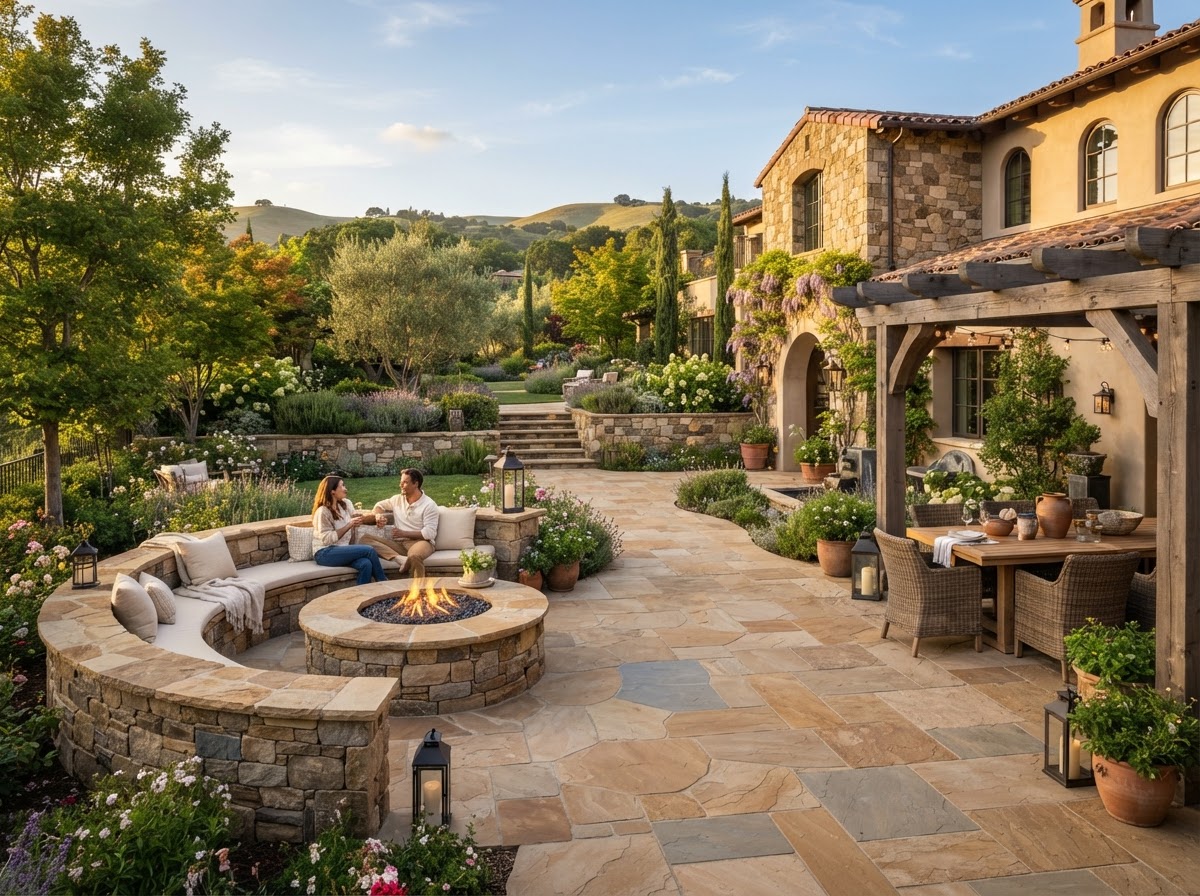
Patios and Hardscapes
Key Takeaways
- Material choice drives most of the cost difference between patios.
- Site prep and drainage affect the timeline more than the patio size.
- Get at least three bids with the same scope to compare fairly.
- A good base layer matters more than the surface material for longevity.
What is Patios and Hardscapes?
A patio is a flat outdoor floor for sitting, dining, and entertaining. A hardscape is the broader term for any built, non-living part of your landscape: walls, walkways, steps, and patios. Patios and hardscapes are the backbone of an outdoor living space because they define where you spend time and how the yard flows.
Styles and Options
Natural stone like bluestone or travertine gives a premium, irregular look. Concrete pavers come in many colors and patterns and are uniform and relatively affordable. Poured concrete is the simplest and cheapest but can crack and stain. Wood or composite decking creates a warmer feel but needs more upkeep.
What Drives the Cost
Factors that shape the budget. No dollar figures, since every project is different.
- Square footage of the patio area
- Material choice (stone, pavers, concrete, wood)
- Site prep and grading needs
- Drainage and retaining walls if on a slope
- Edging and borders
- Complexity of pattern or shape
What Affects the Timeline
- Permit approval if required
- Site prep and grading
- Material availability and delivery lead time
- Weather and ground conditions
- Size and complexity of the layout
How to Plan It, Step by Step
- 1Define the size and use of the patio.
- 2Set a budget range.
- 3Pick a material that fits your style and upkeep tolerance.
- 4Get two to three bids with the same scope.
- 5Check drainage and base requirements with each bidder.
- 6Sign a contract with a firm you trust.
Questions to Ask a Firm
- Q.What base depth do you use, and why?
- Q.How do you handle drainage under and around the patio?
- Q.What is included in the bid and what is an allowance?
- Q.How long is the warranty?
- Q.Can I see a similar project you built?
Red Flags to Watch For
- !A bid with no line for site prep or base material
- !No mention of drainage
- !Pressure to sign without time to compare
- !No warranty in writing
- !A price far below the others without a clear reason
How to Care for It Over Time
Sweep and wash the surface as needed. Reseal stone and pavers every few years to protect against stains and weather. Check for settling or cracking each spring and fix drainage issues before they spread.
Frequently Asked Questions
What is the cheapest patio material?
Poured concrete is typically the most affordable option. Pavers cost a bit more but are easier to repair in sections. Natural stone costs the most but lasts the longest and looks the most premium.
Do I need a permit for a patio?
It depends on your city and the size of the patio. Small ground-level patios often do not need one, but anything large, raised, or near a property line might. Your firm should know the local rules.
How long does a patio last?
A well-built patio with a proper base lasts decades. Poured concrete can crack over time, while stone and pavers hold up longer because they flex with the ground.
Ready to Plan Your Project?
Use our Project Planner to get a tailored plan outline for your project, then take it to any firm you choose.
Project PlannerKeep Reading
By Badger Team · Last updated November 24, 2026