
How to Build a Commercial Landscape Maintenance Schedule That Protects Your Property Value
A maintenance schedule is not a mowing calendar. It is the plan that keeps your grounds looking sharp, your costs predictable, and your property value protected year after year.
Key Takeaways
- A maintenance schedule is a year-round plan, not a mowing calendar. It covers every service, every season, and every area of the property.
- The schedule should match the property's use, not just the calendar. A property that hosts events in spring has different needs than one that is busiest in summer.
- Preventive care costs less than reactive care. A schedule that catches problems early avoids the expensive fixes that come from neglect.
- The schedule is a budget tool. A documented schedule lets you forecast the annual cost, compare vendors, and defend the budget when it is questioned.
How to Build a Commercial Landscape Maintenance Schedule That Protects Your Property Value?
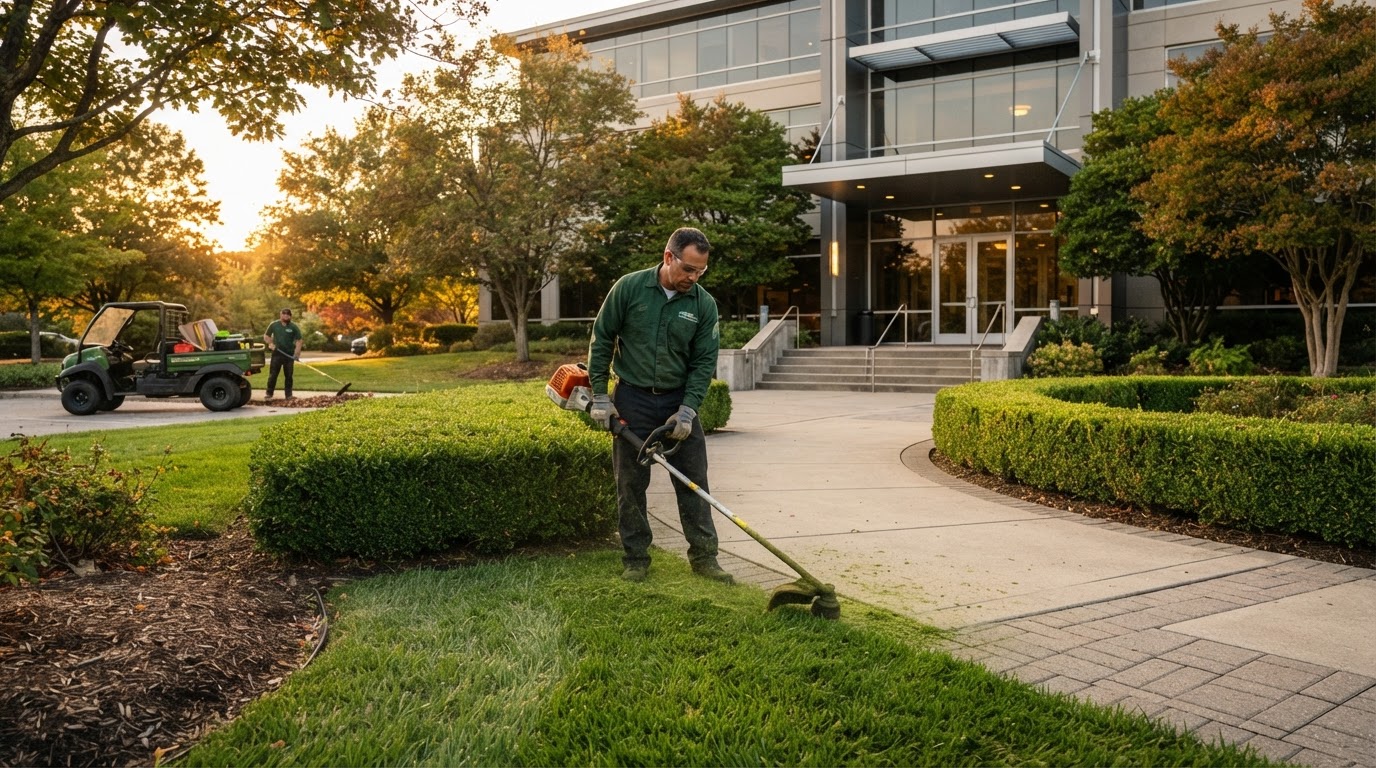
A commercial landscape maintenance schedule is the plan that keeps your grounds looking sharp, your costs predictable, and your property value protected. It is not a mowing calendar. It is a year-round document that covers every service, every season, and every area of the property, from the entry to the parking lot islands to the back fence line. A property with a schedule looks maintained. A property without one looks neglected, and a neglected property loses value faster than any other asset on the balance sheet.
The property value connection is direct. The grounds are the first thing a visitor, a tenant, a customer, or a buyer sees. A property with sharp, healthy grounds signals that the owner cares and that the property is managed. A property with overgrown beds, dead grass, and broken irrigation signals the opposite, and that signal depresses rents, sales, and occupancy. The schedule is what keeps the signal positive, because it is the system that keeps the grounds sharp without relying on someone to notice that they are not.
What Goes Into a Maintenance Schedule?
A complete schedule covers the full year and every service. Mowing is the visible part, but it is not the whole plan. The schedule should include turf care (mowing, fertilizing, aeration, overseeding), bed care (weeding, mulching, edging), pruning (seasonal, by plant type), irrigation (startup, inspection, winterization), pest and disease monitoring, leaf removal, snow and ice management if it applies, and seasonal color rotations. Each service has a frequency, a season, and a standard. The schedule is the document that ties them together.
The schedule should also cover the areas that are easy to forget. The parking lot islands, the back fence line, the dumpster enclosure, the equipment pad. These areas degrade the whole property when they are neglected, because a visitor who sees a weedy dumpster enclosure assumes the whole property is weedy. The schedule should list every area and every service for that area, so nothing is missed because no one was assigned to it.
How Do You Match the Schedule to the Property's Use?
The schedule should match the property's use, not just the calendar. A hotel that hosts weddings in spring needs the grounds at their peak in April and May, which means the pruning, the color rotation, and the turf care have to be timed for that. An office campus that is busiest in summer needs the irrigation and the turf at their best in June and July. A retail property that depends on holiday traffic needs the seasonal color and the lighting ready by November. The schedule should be built around the property's business cycle, because the grounds serve the business.
The frequency should match the visibility. The entry and the areas visitors see first need the most frequent care, because they set the impression. The back areas can be on a lower frequency, because they are seen less. But no area should be on no frequency, because the area that is never serviced is the area that becomes a problem. The schedule balances the frequency against the visibility and the budget, so the money goes where it matters most.
How Do You Build a Preventive Plan?
Preventive care costs less than reactive care. A schedule that catches problems early avoids the expensive fixes that come from neglect. Irrigation inspection catches a leaking head before it runs up the water bill or drowns a bed. Pruning catches a crossing branch before it damages the tree or the building. Aeration catches compacted turf before it thins and weeds take over. The preventive schedule is the one that spends a little on the front end to avoid a lot on the back end.
The preventive plan should include regular inspections, not just services. A monthly walk-through of the property, with a checklist, catches the issues that a mowing crew does not report. A quarterly irrigation check catches the leaks and the coverage gaps. A seasonal plant health assessment catches the stress before it becomes loss. The inspections are the early warning system, and they are what turn the schedule from a service list into a property protection plan.
How Do You Use the Schedule as a Budget Tool?
A documented schedule lets you forecast the annual cost, compare vendors, and defend the budget when it is questioned. The schedule lists every service, its frequency, and its cost, which gives a total annual number that is defensible. A budget without a schedule is a guess. A budget with a schedule is a plan, and a plan is what survives the budget meeting.
The schedule also lets you compare vendors on the same scope. When you bid the maintenance, give every vendor the same schedule and ask for the price per service. The vendor that bids low may be cutting a service. The vendor that bids high may be including a service you do not need. The schedule is what makes the bids comparable, because it defines the scope. Without it, you are comparing prices for different work, which is how properties end up with the wrong vendor and the wrong grounds.
How Do You Manage the Schedule With a Vendor?
The schedule should be a shared document between the owner and the vendor. The vendor should report against it, with a service log that shows what was done, when, and by whom. The owner should review the log monthly, not annually, because a year of neglect is a year of lost value. The review catches the missed services before they become visible problems.
The schedule should be adjustable, because the property changes. A new bed needs more water in its first season. A mature tree needs less pruning than a young one. A season with heavy rain needs more mowing. A season with drought needs more irrigation monitoring. The schedule is a living document, not a fixed contract, and the vendor that treats it as a living document is the vendor that keeps the property sharp. The vendor that treats it as a fixed list is the vendor that misses the changes, and the missed changes are what cost the property its value.
Frequently Asked Questions
How much does a commercial landscape maintenance schedule cost?
The cost depends on the property size, the scope, and the frequency. A documented schedule lets you forecast the annual cost accurately. The cost of the schedule is part of the maintenance budget, and it is what makes the budget defensible. A property without a schedule spends more, because the costs are not planned.
How often should a commercial property be maintained?
It depends on the property and the season. Mowing may be weekly in the growing season and monthly in the dormant season. Pruning is seasonal. Irrigation is monthly during the season. The schedule sets the frequency for each service and each area, based on the property's needs and its use.
What is the difference between a maintenance schedule and a maintenance contract?
The contract is the agreement. The schedule is the plan. The contract should reference the schedule, so the scope is defined. A contract without a schedule is a price for undefined work. A contract with a schedule is a price for a defined plan, which is what protects the property and the budget.
How do I know if my vendor is following the schedule?
Require a service log that shows what was done, when, and by whom. Review it monthly, not annually. Walk the property regularly and compare what you see to what the log says. The vendor that reports accurately is the vendor you can trust. The vendor that does not is the vendor that is costing you value.
Can I build the schedule myself or do I need a professional?
A property manager can build a basic schedule, but a landscape professional who knows the region and the plant types can build a more complete one. The cost of a professional schedule is often less than the cost of the services it prevents from being missed. The schedule is the investment that protects the property value, and it is worth doing right.
Keep Reading


Plan your project
Use the Project Planner to get a plan outline for your project type, with steps and questions to ask.
Start Your Plan