
How to Design a Fire Pit Lounge Area That Actually Gets Used
A fire pit is the most requested backyard feature and the most underused. Here is how to design one your family will sit around every night.
Key Takeaways
- A fire pit is the most requested backyard feature and the most underused. The design, not the fire pit itself, determines whether it gets used.
- Place the fire pit where the wind, smoke, and seating all work in your favor, not against each other.
- Size the seating for the number of people who will actually use it, and leave room to pull chairs in and out.
- Light the lounge separately from the fire so the space works before the sun sets and after the fire dies down.
How to Design a Fire Pit Lounge Area That Actually Gets Used?
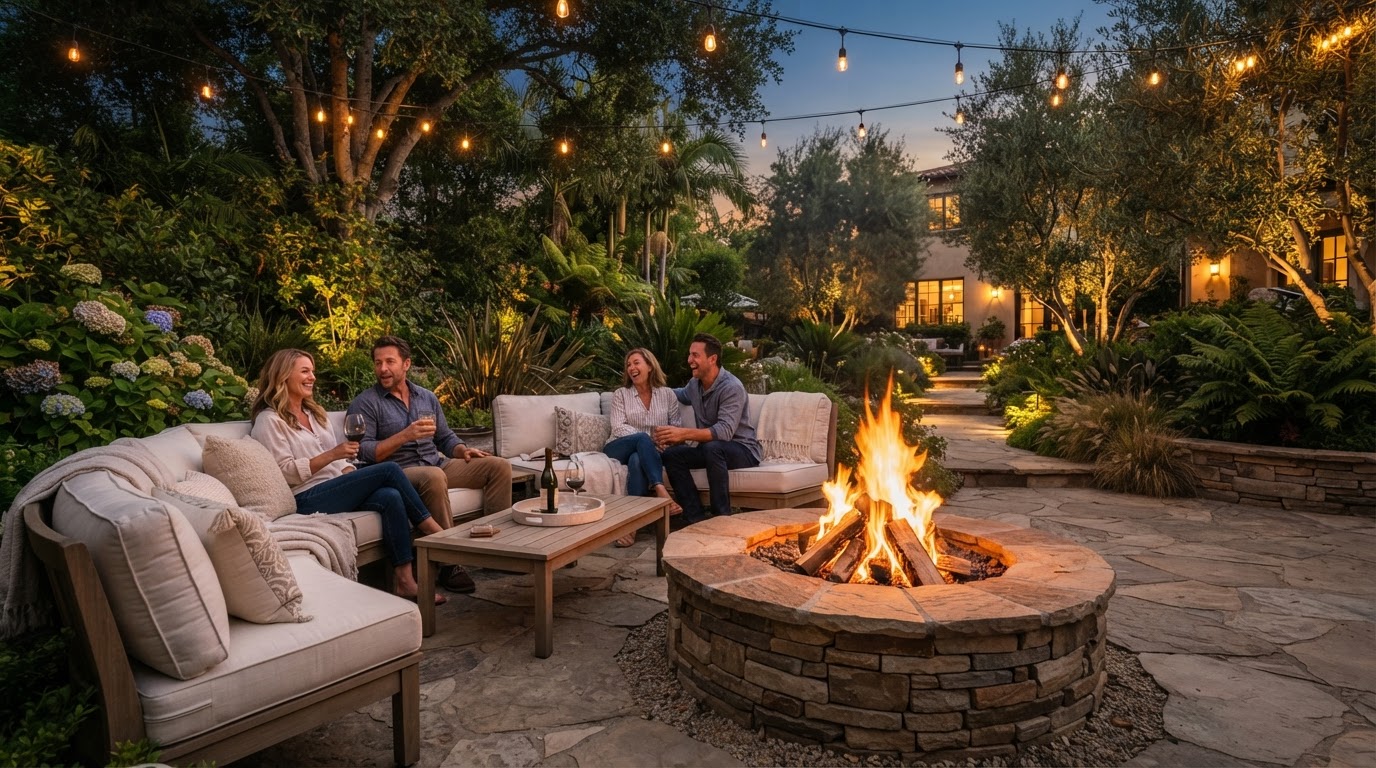
A fire pit lounge is a seating area built around a fire feature, designed for gathering, relaxing, and extending the evening. The reason most fire pits sit unused is not the fire pit. It is the lounge around it. When the seating is uncomfortable, the smoke blows in everyone's face, and the path back to the house is dark, the fire pit becomes a decoration.
Good design fixes all three. The fire pit goes where the wind carries smoke away from the seating. The seating is built for real conversations, not just for looks. And the path is lit so people can come and go without a flashlight.
Where Should a Fire Pit Go in the Yard?
Place the fire pit downwind of where people will sit. Watch where the breeze typically blows in the evening and put the seating upwind of the fire. This keeps smoke out of everyone's eyes.
Keep the fire pit at least 10 feet from structures, overhanging branches, and property lines. Check local fire codes, which often specify minimum setbacks. A level spot with good drainage keeps the fire pit stable and the seating area dry.
What Size Fire Pit Is Right?
A fire pit that is 36 to 44 inches across works for most residential lounges. That is large enough for a real fire and small enough that people can talk across it. A pit that is too large becomes a bonfire, and conversation stops. A pit that is too small does not put out enough heat to matter.
The height matters too. A fire pit that is 12 to 20 inches tall doubles as a footrest and a casual perch. A taller fire pit table works for drinks but not for warming your feet.
How Do You Size the Seating Area?
Plan for the number of people who will use it regularly, not the one night a year you host a crowd. Four to six seats is the sweet spot for most families. Leave 2 to 3 feet between the fire pit edge and the seating so people can lean back without feeling the heat on their shins.
Use seating that can move. Built-in benches look great but lock you into one layout. Movable chairs let you pull in close on a cold night and spread out on a warm one. A mix of a built-in bench on one side and movable chairs on the others gives you the best of both.
What Material Should the Fire Pit Be?
The three common choices are stone, metal, and concrete. Natural stone looks the best and lasts the longest but costs the most. Steel and cast iron heat up fast and are affordable but can rust over time. Concrete and cast stone are durable and affordable but can crack in freeze-thaw climates if not sealed.
If you burn real wood, the material needs to handle high heat. If you use gas, the material choice is more about looks than heat resistance.
Wood, Gas, or Propane: Which Fuel Is Best?
Wood gives the real fire experience, the crackle, the smell, and the high heat, but it needs a wood supply, produces smoke, and may be restricted in your area. Gas and propane are clean, instant, and smokeless, but they cost more to install and do not put out as much heat.
If you want the fire pit used every night, gas is the practical choice. If you want the ritual of building a fire, wood is the experience. Some homeowners install gas for convenience and keep a wood pit elsewhere for the experience.
How Do You Light a Fire Pit Lounge?
Light the lounge separately from the fire. Low path lighting leading to the area, step lights on any changes in level, and soft ambient lighting around the seating make the space usable before the fire is lit and after it dies down. Avoid one bright flood light, which kills the mood.
The fire itself is the centerpiece light. Everything else should be subtle enough that the fire stays the focus.
What Is the Most Common Fire Pit Mistake?
The most common mistake is placing the fire pit in the center of a large open patio with no defined seating area. The fire pit floats in a sea of pavers, the seating is whatever chairs got dragged out, and the space feels like a parking lot with a fire in the middle. Define the lounge with a change in material, a low wall, or planting, and the fire pit becomes a destination instead of an obstacle.
Frequently Asked Questions
How far should a fire pit be from the house?
At least 10 to 20 feet from any structure, and check your local fire code for the exact requirement in your area. Never place a fire pit under overhanging branches or near a fence.
Do I need a permit for a fire pit?
It depends on your city and the fuel type. Gas fire pits often require a permit and a licensed installer. Wood fire pits may be regulated by open-burn rules. Check with your local fire department before building.
What is the best surface under a fire pit?
Stone, pavers, or gravel are the safest surfaces. Never place a wood-burning fire pit on a wood deck or near mulch. A gas fire pit can sit on a deck if it is rated for it and has proper clearance.
How do I keep smoke out of my face?
Place the seating upwind of the fire pit based on the prevailing evening breeze. A fire pit with good airflow burns cleaner and produces less smoke. Gas and propane produce no smoke at all.
Can I build a fire pit myself?
A simple stone or paver fire pit can be a DIY project. Gas and propane fire pits should be installed by a professional to ensure safe gas lines and proper ventilation.
Keep Reading
Plan your project
Use the Project Planner to get a plan outline for your project type, with steps and questions to ask.
Start Your Plan