
How to Plan Commercial Landscape Lighting for Safety and Curb Appeal
Commercial landscape lighting has two jobs: keep people safe after dark and make the property look intentional. Here is how to plan it in layers that do both.
Key Takeaways
- Commercial landscape lighting has two jobs: keep people safe after dark and make the property look intentional and well kept.
- Plan lighting in layers: path and parking for safety, building and signage for identity, and landscape for depth and curb appeal.
- Use durable, energy-efficient fixtures. LED is the standard. Cheap fixtures fail fast and cost more in service calls than the savings.
- Light levels and placement must meet local code for parking lots, walkways, and entries. Code is the floor, not the target.
How to Plan Commercial Landscape Lighting for Safety and Curb Appeal?
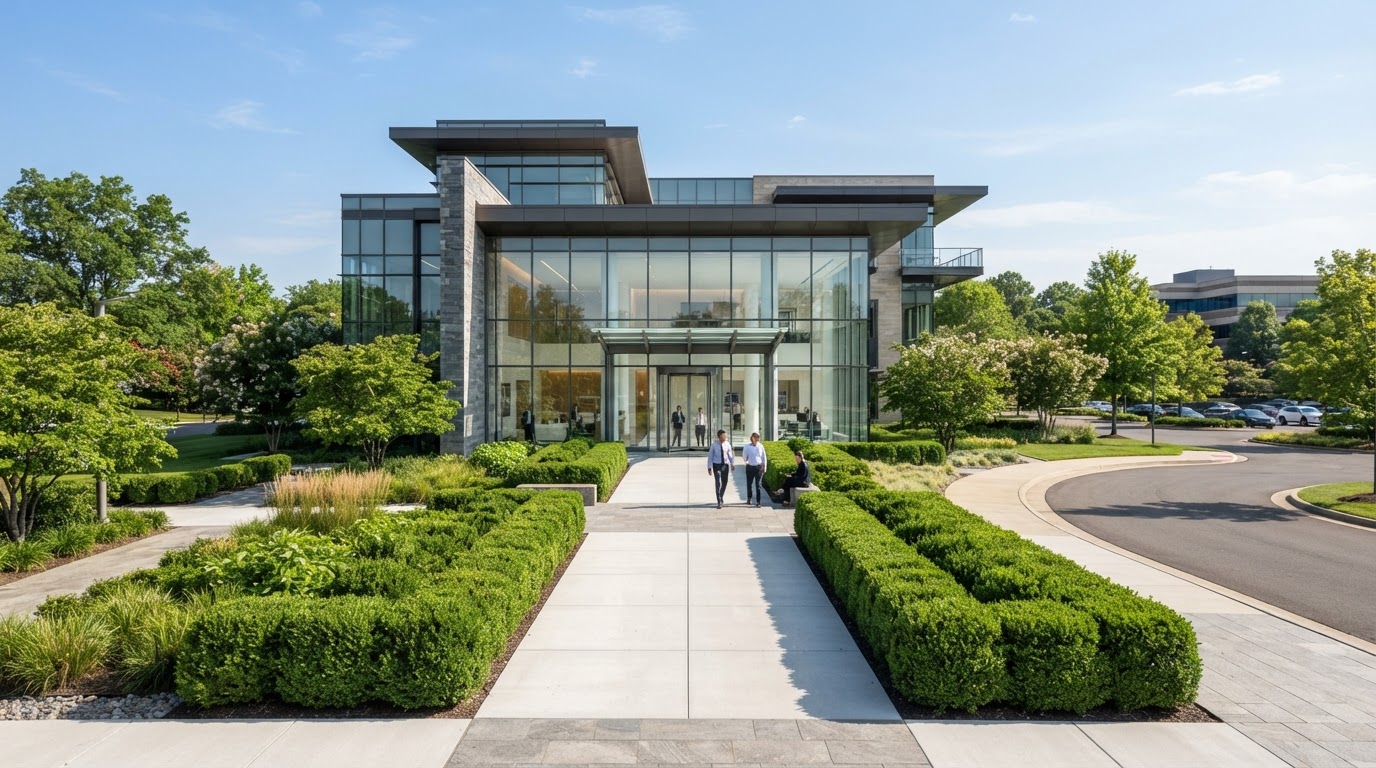
Commercial landscape lighting is the system that keeps a property usable, safe, and attractive after dark. It is not decoration added at the end. It is infrastructure planned alongside the landscape and the building, designed to do two things at once: light the paths and entries people use, and highlight the property so it looks intentional and cared for even at night.
Planning it well means thinking in layers. Each layer has a job, and the layers work together. When the layers are designed together, the property feels safe and looks expensive. When they are not, you get bright spots, dark gaps, and a property that feels either overlit or unsafe.
What Are the Layers of Commercial Landscape Lighting?
The first layer is safety and access lighting. This is the path lighting, the parking lot lighting, and the entry lighting that lets people move through the property without tripping or feeling unsafe. It is the non-negotiable layer. The second layer is identity lighting. This is the lighting on the building, the signage, and the main entrance that tells people where they are and reinforces the brand.
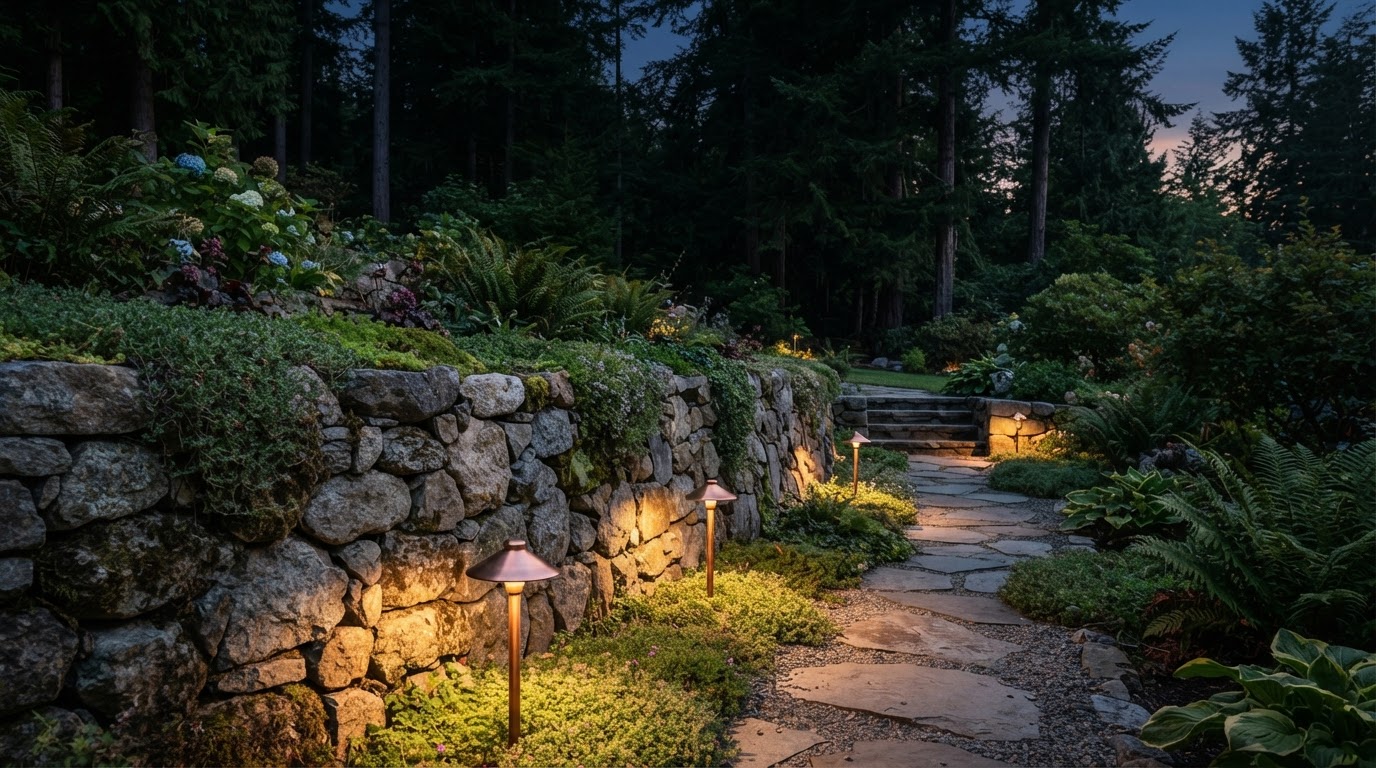
The third layer is landscape lighting. This is the uplighting on trees, the grazing on walls, and the accent lighting on key plantings that give the property depth and curb appeal at night. This is the layer that makes the property look designed rather than just lit.
How Do You Light Walkways and Parking Lots Safely?
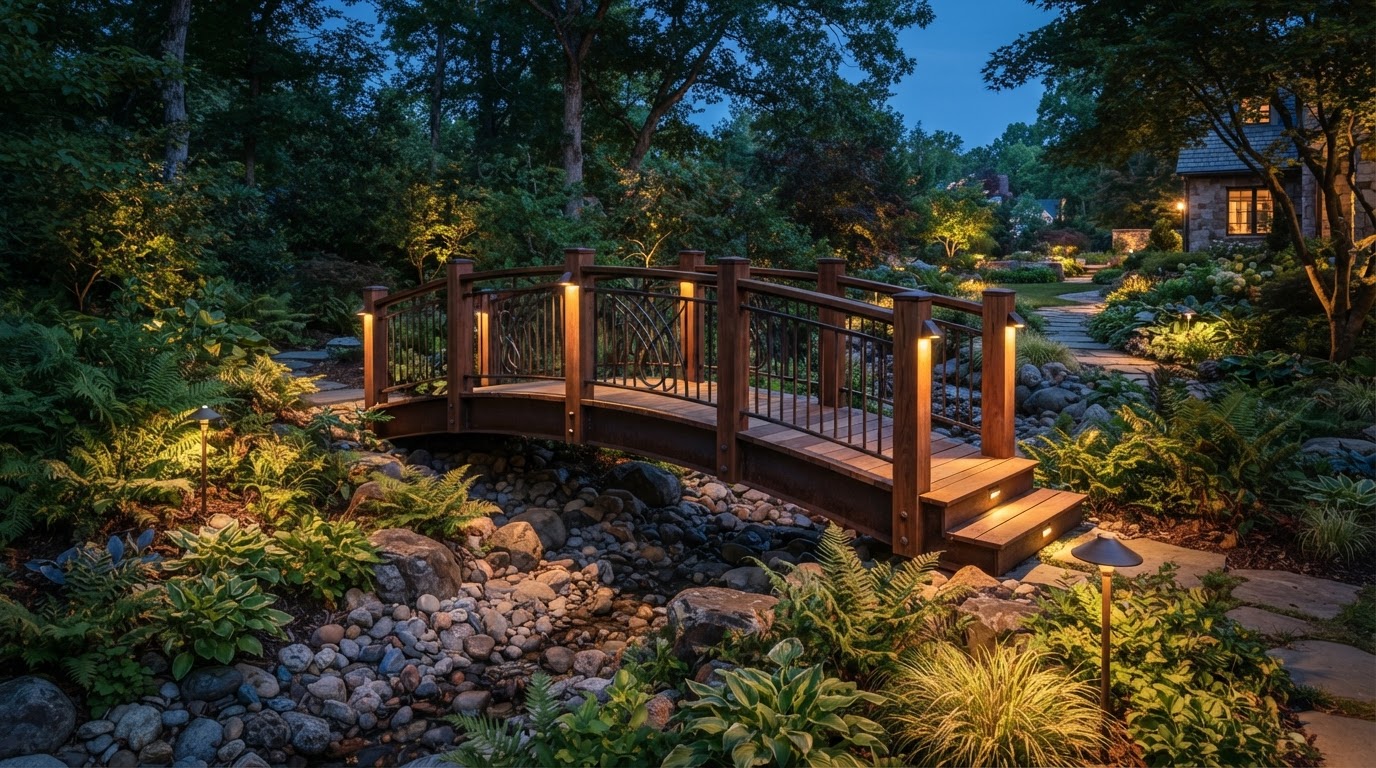
Walkway lighting should be low and even. Path lights at 18 to 24 inches mark the route without glare. The goal is to show the edge of the path and any steps, not to flood the area with light. Space fixtures so the pools of light overlap slightly, with no dark gaps between them.
Parking lot lighting is governed by code. Most jurisdictions require a minimum foot-candle level across the lot, with limits on how much light can spill onto neighboring properties. Use full-cutoff fixtures that direct light down, not out. Pole height and spacing are engineered to meet the code level evenly. Do not guess at this. A lighting plan that fails code is a permit problem and a liability problem.
How Do You Light a Building and Signage?
Building lighting reinforces identity. Graze a textured wall with a narrow beam to show the material. Wash a smooth wall with a wide beam to show the shape. Uplight columns to define the entrance. The goal is to show the architecture at night the way the architect intended it to read during the day.
Signage lighting has to make the sign legible from the road without creating glare. Internal illumination is common, but external spot lighting on a monument sign often looks more premium. Either way, the light level has to be bright enough to read but not so bright that it becomes a nuisance to neighbors or drivers.
How Do You Light the Landscape Itself?
Landscape lighting is what separates a lit property from a designed property. Uplight specimen trees from the ground to show their structure. Graze hedges and walls to create a backdrop. Light water features from within. The effect is depth. Without it, the property looks flat at night, like a photo with no background.
Be selective. Light the best features and leave the rest in low light. A property where every tree is lit looks busy and costs more to run and maintain. A property where five key trees are lit looks intentional and expensive.
What Fixtures Should You Use?
Use commercial-grade LED fixtures with brass, copper, or marine-grade stainless bodies. Cheap aluminum fixtures corrode within a few years, especially near irrigation or in coastal areas. The fixture is a long-term investment. The cost of replacing a failed fixture, including the truck roll and the labor, is far higher than the cost of buying the right one once.
Look for fixtures with replaceable LED boards and drivers. When an LED fails, you want to replace the component, not the whole fixture. Integrated, non-replaceable LEDs are cheaper up front and more expensive over the life of the system.
How Do You Control Commercial Landscape Lighting?
Use an astronomical timer that turns the system on and off based on sunrise and sunset, not a fixed clock. A fixed clock drifts out of sync with the seasons. An astronomical timer adjusts automatically. For larger properties, a networked control system lets you manage zones independently, dim after hours, and monitor failures remotely.
Plan the zones so you can turn off the landscape layer after hours while the safety layer stays on. There is no reason to uplight trees at 2am, but there is every reason to keep the walkway lit. Zoning saves energy and extends fixture life.
How Do You Maintain Commercial Landscape Lighting?
Landscape lighting needs maintenance. Fixtures get bumped by mowers, buried by mulch, and knocked out of aim by growth. Schedule a relamping and re-aiming walk twice a year, in spring and fall. Check for buried fixtures, shifted beams, and failed lamps. A lighting system that is never re-aimed drifts out of design within two seasons.
Keep a map of the system and a spare-parts kit. When a fixture fails, the replacement should be on the shelf, not on a two-week order. The fastest way to keep a property looking lit is to fix failures immediately, not to wait for a quarterly service visit.
Frequently Asked Questions
How bright should commercial landscape lighting be?
Bright enough to be safe and legible, not so bright that it creates glare or light pollution. Path lighting is typically low and warm. Parking lots are governed by code. Landscape lighting is subtle and selective, not flood lighting.
Does commercial landscape lighting need a permit?
Often yes, especially for parking lot and building lighting. Most jurisdictions have light-level and glare requirements. A lighting plan that meets code is part of the permit set, not an afterthought.
How long do commercial LED landscape fixtures last?
A quality commercial LED fixture lasts 50,000 hours or more, which is roughly 10 to 15 years of nighttime use. The driver often fails before the LED itself. Buy fixtures with replaceable drivers so the whole unit does not need to be replaced.
Can I add lighting to an existing landscape?
Yes. Retrofit lighting is common. The main constraint is getting power to the fixtures. Trenching through an existing landscape is disruptive, so plan the wire runs to minimize damage to hardscape and mature plantings.
What color temperature is best for commercial lighting?
2700K to 3000K warm white is the standard for landscape and building lighting. It looks natural and inviting. 4000K and higher looks institutional and harsh. Keep the color temperature consistent across the property.
Keep Reading
Plan your project
Use the Project Planner to get a plan outline for your project type, with steps and questions to ask.
Start Your Plan