
How to Upgrade Your Hotel or Resort Grounds Without Disrupting Guests
A grounds upgrade should make the property more beautiful, not more stressful for the people staying there. Here is how to renovate without disturbing the guest experience.
Key Takeaways
- A hotel or resort grounds upgrade can be done without disrupting the guest experience, because the upgrade that is phased, scheduled, and communicated is the upgrade that guests barely notice, and the upgrade that is not is the upgrade that generates complaints.
- The phasing is the strategy that keeps the property open and beautiful throughout the renovation, because the work that happens in sections is the work that leaves the rest of the property usable, and the work that happens all at once is the work that shuts the property down.
- The scheduling is the tactic that minimizes guest impact, because the work that happens during low-occupancy periods, off-season, or mid-week is the work that affects the fewest guests, and the work that happens during peak season is the work that affects the most.
- The communication is the layer that turns a renovation from a disruption into a sign of investment, because the guest who is told what is happening is the guest who sees improvement, and the guest who is not told is the guest who sees a mess.
How Do You Upgrade Hotel or Resort Grounds Without Disrupting Guests?
A hotel or resort grounds upgrade is a project that has two goals that seem to conflict, because the goal of the upgrade is to make the property more beautiful, and the goal of the operation is to keep the guests happy, and the renovation that makes the property more beautiful but disrupts the guests is the renovation that costs the property the guests it was trying to impress. The upgrade that is done without disruption is the upgrade that is phased, scheduled, and communicated, and the upgrade that is not is the upgrade that the guests remember for the wrong reasons. The difference is not the scope or the budget, it is the plan, because the plan that accounts for the guests is the plan that keeps the guests, and the plan that does not is the plan that loses them.
The plan has three parts: the phasing that breaks the work into sections, the scheduling that places each section in the lowest-impact window, and the communication that tells the guests what is happening before it affects them. Each part is a layer of protection for the guest experience, and the upgrade that has all three is the upgrade that runs smooth, and the upgrade that has two of the three is the upgrade that runs into the problem that the missing layer would have prevented.
How Do You Phase the Work So the Property Stays Open?
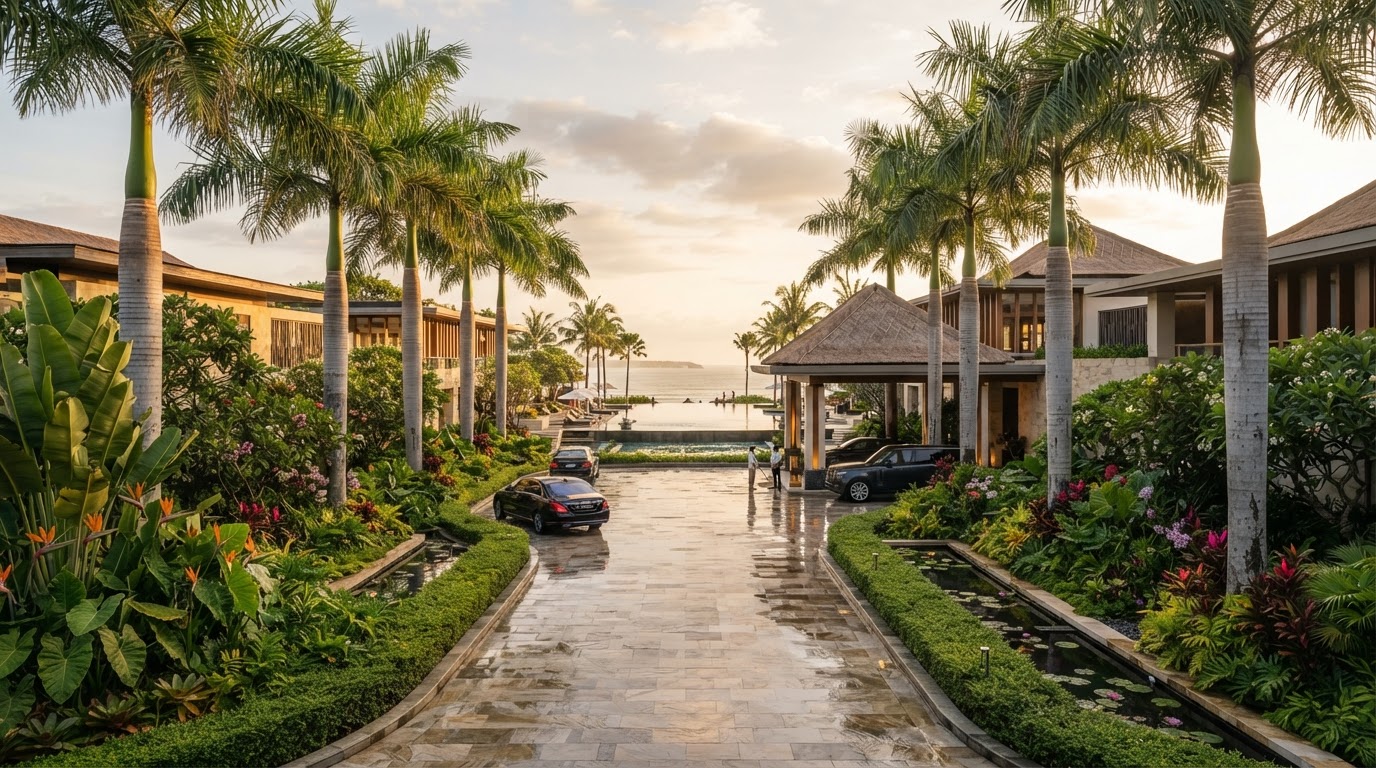
The phasing breaks the grounds upgrade into sections that can be completed one at a time, and each section is a zone of the property that can be closed off without closing the whole property. The entrance is one phase, the pool deck is another, the garden paths are another, the perimeter plantings are another, and each one is completed and reopened before the next one starts. The phasing that is planned around the guest flow is the phasing that keeps the property open, because the phase that is closed is the phase that guests can route around, and the phase that is not planned around the guest flow is the phase that blocks the only path.
The phasing also lets the property show progress, because the section that is completed and reopened is the section that the guests see as improvement, and the improvement that is visible is the improvement that the guests appreciate, even while the next section is under construction. The property that shows progress is the property that the guests see as investing, and the property that shows no progress is the property that the guests see as under construction, and the perception is the difference between a guest who books again and one who does not.
How Do You Schedule the Work for the Lowest Guest Impact?
The scheduling places each phase in the window that affects the fewest guests, because the work that happens during the off-season is the work that affects the fewest, and the work that happens during the peak is the work that affects the most. The hotel that schedules the entrance renovation for January is the hotel that renovates when the occupancy is lowest, and the hotel that schedules it for July is the hotel that renovates when the occupancy is highest. The scheduling that matches the work to the occupancy is the scheduling that minimizes the impact, and the scheduling that does not is the scheduling that maximizes it.
The daily scheduling matters too, because the work that happens before the guests are awake or after they have left for the day is the work that the guests do not see, and the work that happens during the pool hours is the work that the guests do see. The noisy work, like demolition and grading, is scheduled for the early morning or the off-hours, and the quiet work, like planting and mulching, is scheduled for the day. The scheduling that sorts the work by noise and visibility is the scheduling that keeps the disruption low, and the scheduling that does not is the scheduling that disrupts the guest experience for no reason.
How Do You Communicate the Upgrade to Guests?
The communication is the layer that turns the renovation from a disruption into a sign of investment, because the guest who is told what is happening is the guest who understands that the noise is temporary and the improvement is permanent, and the guest who is not told is the guest who sees the noise as a problem and the mess as a sign of a property that does not care. The communication starts before the renovation begins, with a notice in the room, at the front desk, and in the booking confirmation, and it continues throughout with updates at the front desk and signs at the work zones.
The communication that is honest and specific is the communication that guests respect, because the guest who is told that the pool deck is being resurfaced and will reopen in two weeks is the guest who books around it or accepts it, and the guest who is told nothing is the guest who complains about the noise and the dust. The communication that frames the renovation as an upgrade is the communication that makes the guest feel that the property is getting better, and the communication that hides the renovation is the communication that makes the guest feel that the property is hiding something, and the feeling that the property is hiding something is worse than the renovation itself.
How Do You Keep the Work Zones Safe and Clean?
The work zones are the areas that are under construction, and the safety and the cleanliness of the work zones are the details that the guests notice even when they do not say anything, because the work zone that is fenced, signed, and clean is the work zone that the guest sees as professional, and the work zone that is open, unmarked, and messy is the work zone that the guest sees as a hazard. The fencing keeps the guests out of the construction area, the signs tell them where to walk, and the cleanliness tells them that the contractor is professional, and the three together are the difference between a work zone that the guest tolerates and one that the guest photographs and posts.
The work zone that is cleaned at the end of each day is the work zone that does not leave debris, dust, or tools in the guest areas, and the work zone that is not cleaned is the work zone that leaves the mess that the guest steps in. The contractor that cleans up is the contractor that the hotel should hire, and the contractor that does not is the contractor that the hotel should not, because the cleanliness of the work zone is the cleanliness that the guest associates with the property, and the property that is clean during a renovation is the property that is clean always.
Frequently Asked Questions
How long does a hotel or resort grounds upgrade take?
The timeline depends on the scope, the size of the property, and the phasing. A full grounds upgrade on a large resort can take three to six months when it is phased to keep the property open, and an entrance or pool deck upgrade on a smaller hotel can take four to eight weeks. The timeline that is planned around the guest impact is the timeline that is longer but safer, and the timeline that is rushed is the timeline that is shorter but disrupts more. The right timeline is the one that keeps the property open and the guests happy, not the one that finishes fastest.
Can a hotel stay open during a grounds renovation?
Yes. A hotel or resort can stay open throughout a grounds renovation when the work is phased, scheduled, and communicated. The phasing keeps each section closed only temporarily, the scheduling places the noisiest work in the lowest-occupancy windows, and the communication keeps the guests informed. The property that phases the work is the property that stays open, and the property that does not phase the work is the property that has to close sections or risk the guest complaints that close them for it. The phasing is the strategy that makes the open-property renovation possible.
What is the best time of year to upgrade hotel grounds?
The best time is the off-season, when the occupancy is lowest and the guest impact is smallest, because the work that happens when the hotel is half-empty is the work that affects half the guests, and the work that happens when the hotel is full is the work that affects all of them. The off-season varies by location, because the resort that is busy in the summer is the resort that is quiet in the winter, and the business hotel that is busy mid-week is the business hotel that is quiet on weekends. The best time is the time that matches the property's occupancy pattern, and the schedule that places the heaviest work in the lowest-occupancy window is the schedule that minimizes the disruption.
How do you keep guests happy during a grounds renovation?
Guests stay happy during a renovation when they are informed, when the disruption is minimized, and when the completed work is visible. The guest who is told what is happening and when is the guest who tolerates the noise, and the guest who sees the completed entrance or pool deck is the guest who sees the renovation as improvement. The communication, the scheduling, and the phasing are the three things that keep guests happy, and the renovation that has all three is the renovation that the guests do not complain about, and the renovation that has none is the renovation that the guests do.
Should a hotel hire a design/build firm or separate the design and construction for a grounds upgrade?
A design/build firm is almost always the better choice for a hotel or resort grounds upgrade, because the integrated team handles the design, the construction, and the phasing in one process, and the phasing that keeps the property open is the phasing that requires the design and the construction to be coordinated from the start. The separate design and contractor approach adds a layer of coordination that slows the project and creates gaps between the design intent and the construction execution, and the grounds upgrade that needs to be phased for guest impact is the upgrade that needs the integration that design/build provides. The design/build firm is the firm that delivers the upgrade without the disruption, and the separate approach is the approach that delivers it with the coordination overhead that makes the disruption worse.
Keep Reading

Plan your project
Use the Project Planner to get a plan outline for your project type, with steps and questions to ask.
Start Your Plan