
Landscape Design and Planting
Key Takeaways
- A drawn plan saves money by preventing impulse plant buys.
- Native and climate-appropriate plants need less water and care.
- Soil prep and irrigation matter more than the plant choices.
- Phasing the planting spreads the cost over more than one season.
What is Landscape Design and Planting?
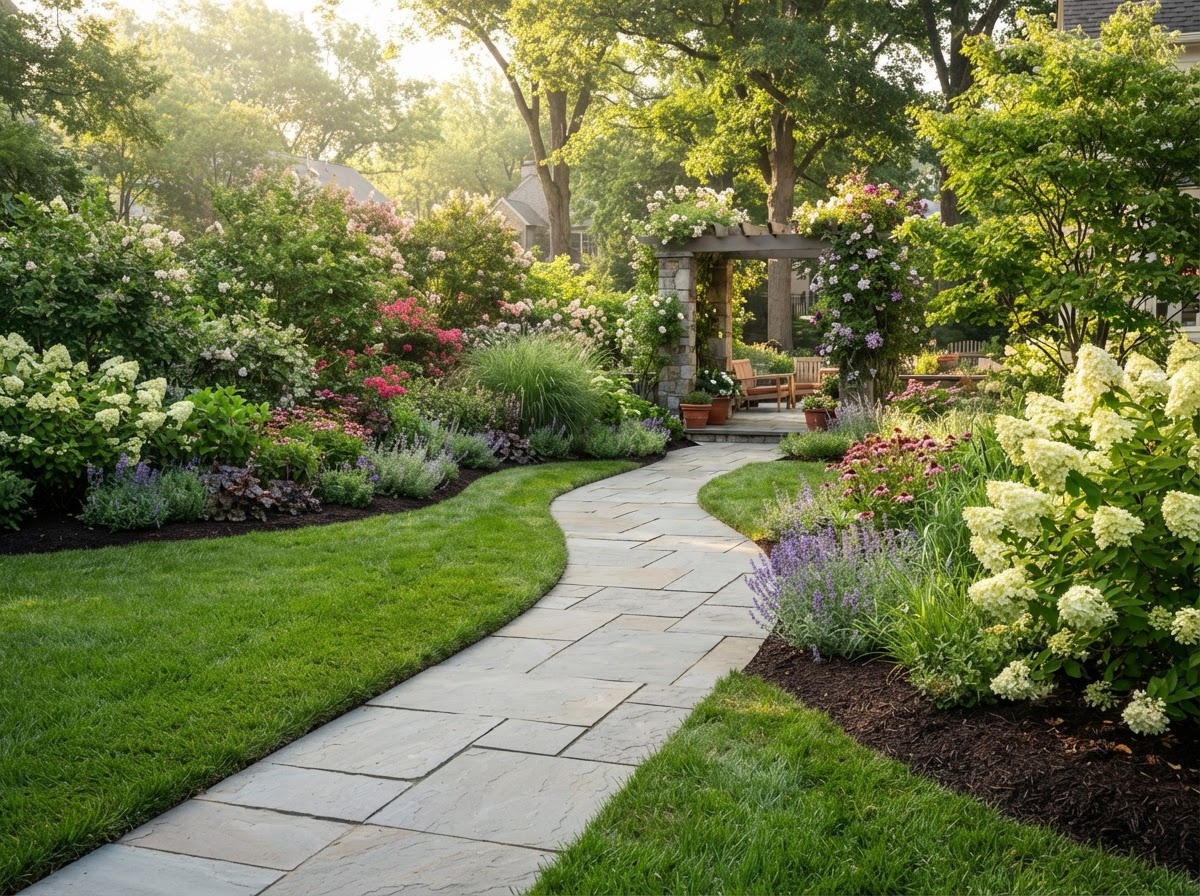
Landscape design is a drawn plan showing what goes where in your yard: trees, shrubs, beds, paths, and open space. Planting is the installation of those plants. Together they create the living layer of your outdoor space.
Styles and Options
Styles range from formal and structured to natural and wild. Options include foundation planting around the house, specimen trees as focal points, mixed beds for year-round interest, and native or xeriscape planting for low water use.
What Drives the Cost
Factors that shape the budget. No dollar figures, since every project is different.
- Size of the planting area
- Plant sizes and species (specimen vs. standard)
- Soil prep and amendments
- Irrigation system
- Hardscape edges and bed borders
- Number of phases
What Affects the Timeline
- Best planting season for your region
- Plant availability from nurseries
- Soil and site prep
- Irrigation installation
- Weather and water access
How to Plan It, Step by Step
- 1Walk the yard and note sun, shade, and water flow.
- 2Set a budget and decide how many phases.
- 3Get a design with a planting list.
- 4Pick plants that fit your climate and upkeep.
- 5Get bids with the same scope.
- 6Install irrigation before planting.
Questions to Ask a Firm
- Q.Are these plants right for my sun, soil, and zone?
- Q.How much water will they need?
- Q.What is the warranty on the plants?
- Q.When is the best time to plant here?
- Q.Can I see a yard you planted recently?
Red Flags to Watch For
- !Plants not suited to your climate zone
- !No irrigation plan
- !No warranty on new plants
- !A bid that skips soil prep
- !Pressure to plant out of season
How to Care for It Over Time
Water on a schedule for the first year while roots establish. Mulch beds to hold moisture and suppress weeds. Prune in the right season for each plant type. Fertilize as needed and watch for pests.
Frequently Asked Questions
What is native planting?
Using plants that grow naturally in your region. They need less water, fertilizer, and pest control because they are adapted to the local climate and soil.
When should I plant?
It depends on your region and the plant type. Fall and spring are common planting windows because the weather is mild and roots can establish before summer heat or winter cold.
Do I need irrigation for new plants?
Most new plantings need consistent water for the first year. An irrigation system makes this easier and more reliable than hand watering, especially for larger beds.
Ready to Plan Your Project?
Use our Project Planner to get a tailored plan outline for your project, then take it to any firm you choose.
Project PlannerKeep Reading
By Badger Team · Last updated November 24, 2026