
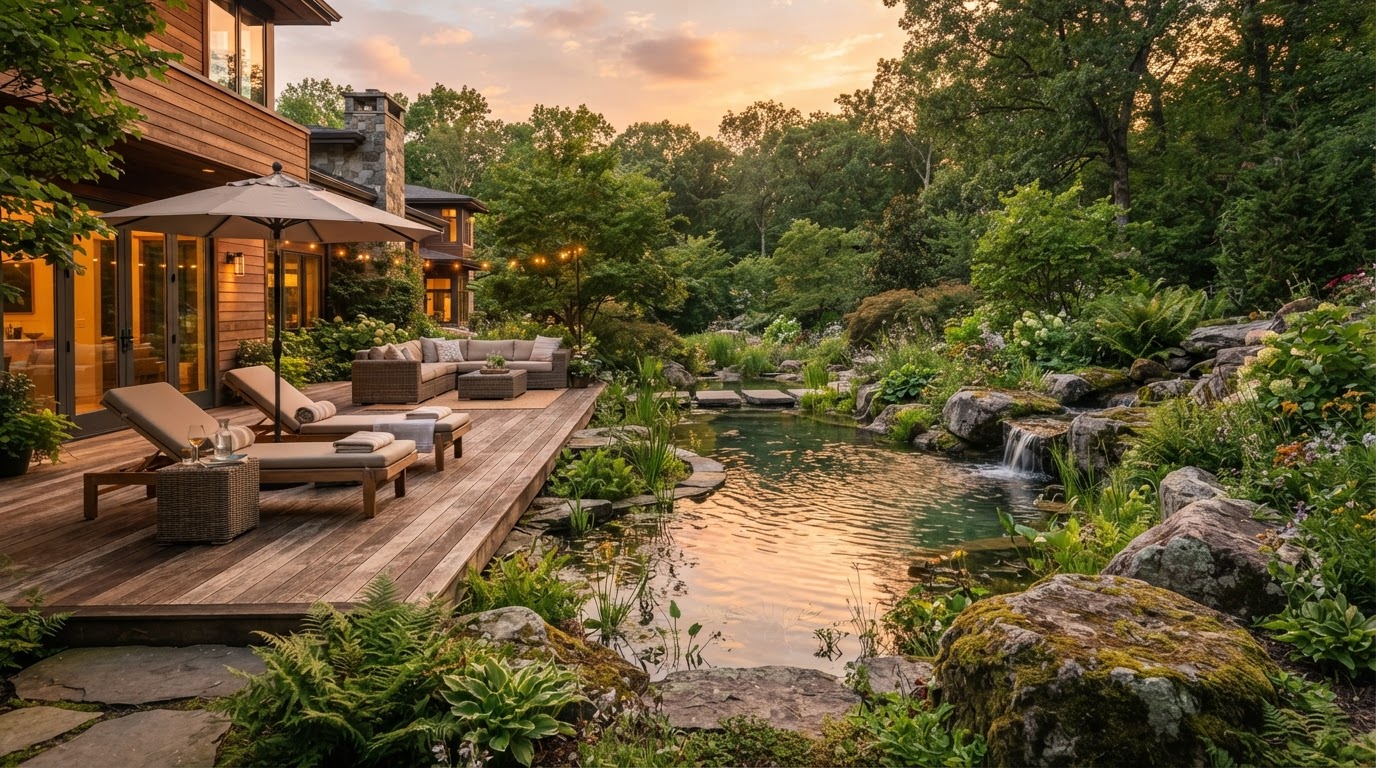
How to Build a Natural Swimming Pond for Your Backyard
A natural swimming pond is a pool that cleans itself with plants instead of chemicals. Here is how to plan one that looks like it belongs in your yard and actually stays clean.
Key Takeaways
- A natural swimming pond uses plants and beneficial bacteria to keep water clean instead of chlorine or salt systems.
- The design has two zones: a swimming area and a regeneration zone filled with aquatic plants that filter the water.
- Site selection, soil type, and water table all determine whether a pond works or becomes a maintenance nightmare.
- Plan for a pump and skimmer system even in a natural pond. The plants do the filtering, but water still needs to move.
How to Build a Natural Swimming Pond for Your Backyard?
A natural swimming pond is a pool that cleans itself. Instead of dumping chlorine into the water every week, you build a living ecosystem where aquatic plants and beneficial bacteria keep the water clean and clear. The result looks like a natural pond that happened to appear in your yard, not a swimming pool disguised with rocks.
Building one well means understanding how the ecosystem works before you start digging. The pond has two zones that work together, and the design has to balance swimming space with enough plant area to actually filter the water. Get the ratio wrong and you get murky water. Get it right and you get a pool that stays clean with far less chemical maintenance than a traditional pool.
What Is a Natural Swimming Pond?
A natural swimming pond is a body of water designed for swimming that uses biological filtration instead of chemical treatment. The water is kept clean by a combination of aquatic plants, beneficial bacteria, and a mechanical pump system that circulates water through a planted regeneration zone. No chlorine, no salt, no daily chemical testing.
The pond has two connected zones. The swimming zone is where you swim, and it is typically lined and kept clear of plants. The regeneration zone is a shallow area, usually about 20 to 30 percent of the total surface area, filled with aquatic plants that filter the water. Water circulates between the two zones continuously, and the plants and bacteria in the regeneration zone do the work that chemicals do in a traditional pool.
How Do You Choose a Site for a Swimming Pond?
Site selection is the single most important decision. The pond needs sun for the plants to thrive, but not so much sun that the water overheats. A spot with morning sun and afternoon shade is ideal. Avoid areas with overhanging trees that drop leaves and debris into the water.
Soil type and water table matter. A high water table can push against the liner and cause problems. Clay soil holds water but makes excavation harder. Sandy soil drains fast and may need a heavier liner. A professional site assessment before you commit to a location can save you from building a pond that fights its own environment.
What Size Should the Swimming and Regeneration Zones Be?
The swimming zone needs to be deep enough to swim in, typically 6 to 8 feet at the deepest point. The size depends on how you plan to use it. A pond for cooling off on hot days can be smaller than one for laps. The regeneration zone needs to be at least 20 to 30 percent of the total surface area for the plants to filter effectively.
If the regeneration zone is too small, the plants cannot keep up with the nutrient load and the water goes green. If it is too large, you lose swimming space. The ratio is the design decision that makes or breaks the pond, and it should be based on your climate, your plant choices, and how much swimming area you actually want.
What Plants Work in a Natural Swimming Pond?
The regeneration zone needs a mix of plant types. Oxygenating plants like hornwort and anacharis sit below the surface and add oxygen to the water. Floating plants like water lilies provide shade and compete with algae for nutrients. Marginal plants like iris and cattails grow at the edge and absorb nutrients from the water.
Choose native plants when possible. They are adapted to your climate, need less care, and support local wildlife. Avoid invasive species that can take over the pond and choke out the balance. A pond planted with the right mix of natives will stay cleaner with less intervention than one planted with whatever looked good at the garden center.
Does a Natural Pond Need a Pump?
Yes. Even a natural pond needs water movement. A pump circulates water from the swimming zone through the regeneration zone and back, keeping the water oxygenated and preventing stagnation. A skimmer pulls leaves and debris off the surface before they sink and decompose. The pump does not replace the plants. It supports them.
The pump size depends on the pond volume. A general rule is that the entire volume of water should circulate every 4 to 6 hours. An undersized pump means the water moves too slowly to stay clean. An oversized pump wastes energy and can disturb the plants. Size it to the pond, not to what the dealer wants to sell you.
How Do You Maintain a Natural Swimming Pond?
Maintenance is different from a traditional pool but not necessarily less. You are not testing and adding chemicals, but you are managing a living system. The plants need thinning a few times a year. The skimmer needs emptying. The pump needs seasonal cleaning. The regeneration zone may need replanting as plants mature and spread.
The biggest maintenance task is managing nutrients. Leaves, pollen, and runoff add nutrients to the water. Too many nutrients feed algae. A well-designed pond with enough plant coverage and good circulation stays clear naturally. A poorly designed one turns green and requires manual intervention. The design determines the maintenance load.
How Much Does a Natural Swimming Pond Cost?
A natural swimming pond typically costs more to build than a conventional pool of the same size because of the larger footprint, the liner, the pump system, and the planting. The regeneration zone adds area that a standard pool does not have. The liner has to cover the entire pond, swimming zone and regeneration zone alike.
The trade-off is lower ongoing chemical costs. You are not buying chlorine, salt, or algaecide every month. The plants are the filtration system. Over the life of the pond, the lower chemical and maintenance costs can offset the higher upfront investment, but the initial build is not cheap. Plan for the full cost before you start.
Frequently Asked Questions
Can you actually swim in a natural swimming pond?
Yes. The swimming zone is kept clear of plants and is designed for swimming. The regeneration zone is where the plants live. You swim in clean, plant-filtered water without the chemical smell of a traditional pool.
Will a natural swimming pond attract mosquitoes?
No, not if it is designed correctly. Mosquitoes breed in stagnant water. A pond with a pump that keeps water moving does not provide the still water mosquitoes need. The fish and other wildlife attracted to a healthy pond also eat mosquito larvae.
Is a natural swimming pond safe for children and pets?
Yes, with the same precautions as any body of water. The swimming zone is deep, so young children need supervision. The regeneration zone is typically shallow. A pond can be fenced the same way a pool is, depending on local code.
How long does it take to build a natural swimming pond?
Typically 6 to 12 weeks from excavation to first swim, depending on size, site conditions, and permitting. The planting takes longer to fully establish. The pond may need a full season before the ecosystem balances and the water clears completely.
Can I convert my existing pool to a natural swimming pond?
Sometimes, but it is usually more cost-effective to start fresh. A conversion requires adding a regeneration zone, replumbing for the new circulation pattern, and completely replanting. A new build lets you design the pond correctly from the start.
Keep Reading
Plan your project
Use the Project Planner to get a plan outline for your project type, with steps and questions to ask.
Start Your Plan