
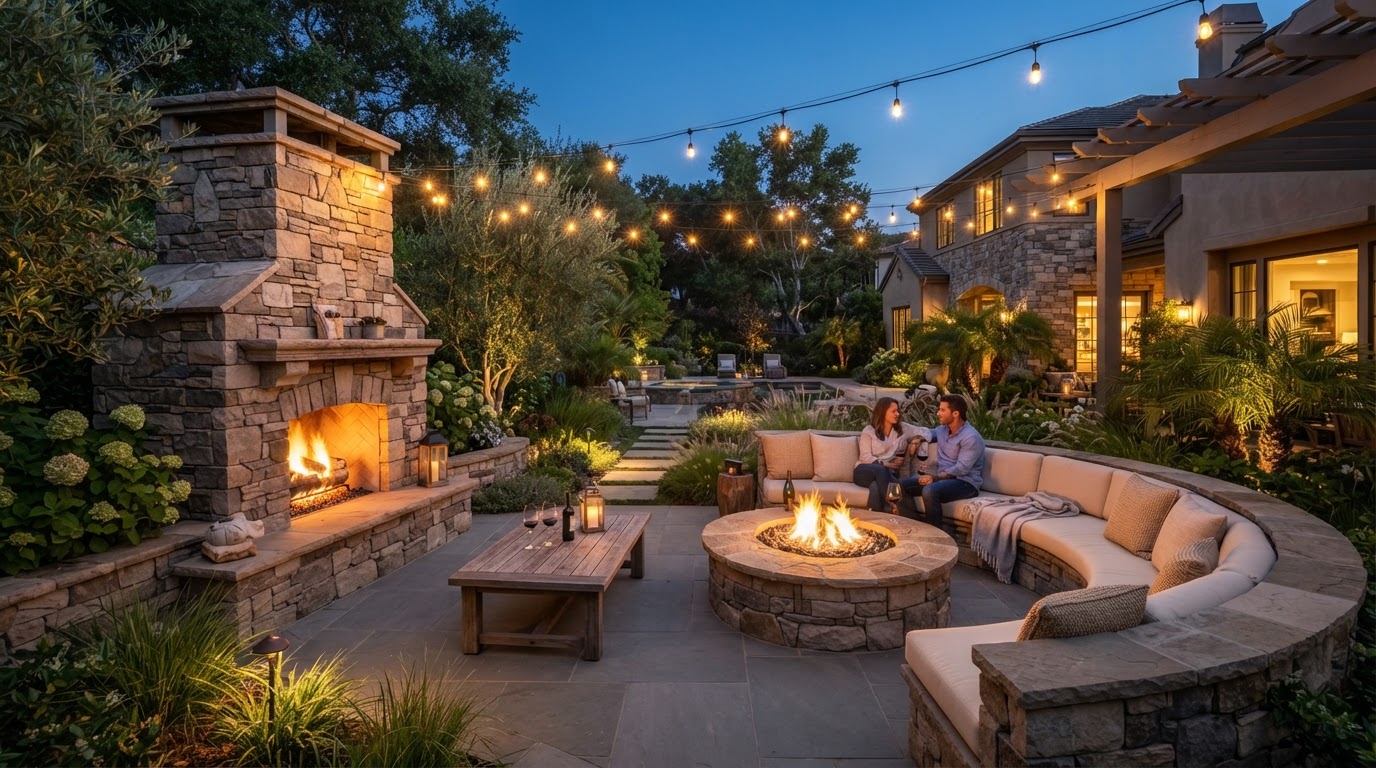
How to Design an Outdoor Kitchen for Real Cooking
An outdoor kitchen built for real cooking is a working kitchen, not a grill on a patio. Here is how to lay out the zones, run the utilities, and choose materials that last.
Key Takeaways
- A real outdoor kitchen is built around how you actually cook, not around a grill stuck on a patio.
- Plan the layout as work zones: prep, cook, plate, and clean. Each one needs counter space and access.
- Utilities drive the cost and the timeline. Run gas, water, and electrical early, before the hardscape goes in.
- Choose materials that survive heat, grease, and weather. Indoor kitchen materials do not last outdoors.
How to Design an Outdoor Kitchen for Real Cooking?
An outdoor kitchen built for real cooking is a working kitchen, not a grill station with a counter. It has prep space, cooking zones, storage, and cleanup, laid out so you can move through a meal the way you do indoors. When the layout works, you cook outside more than you thought you would. When it does not, the kitchen becomes an expensive place to warm up burgers.
Designing it well means thinking about how you cook before you think about how it looks. The appliances, the counter layout, and the utilities all follow from the way you actually use the space.
What Is an Outdoor Kitchen?
An outdoor kitchen is a permanent cooking area built with weather-resistant materials and dedicated utilities. It includes a grill or cooking appliance, counter space for prep and plating, storage, and often a sink, a refrigerator, and side burners. A true outdoor kitchen is built into a structure, not wheeled into place.
The difference between a grill station and an outdoor kitchen is the workflow. A grill station is one appliance on a pad. An outdoor kitchen is a sequence of stations that let you prep, cook, serve, and clean without walking back inside.
How Do You Layout an Outdoor Kitchen?
Use the same work-zone logic as an indoor kitchen. The four zones are prep, cook, plate, and clean. Each zone needs counter space, and the flow between them should be short and direct. The cook zone sits in the center, with the prep zone on one side and the plating zone on the other. The clean zone, with the sink, sits at the end of the run.
Leave at least 12 to 18 inches of counter on each side of the grill for resting pans and plating food. A sink needs at least 24 inches of counter on one side. If you have a side burner, give it its own clear space away from the grill so the heat does not interfere.
What Appliances Belong in an Outdoor Kitchen?
The core appliance is the grill. Choose a built-in grill rated for outdoor use, not a freestanding model dropped into a hole. Beyond the grill, the most useful additions are a side burner for sauces and sides, a refrigerator for drinks and condiments, a sink for cleanup, and storage drawers for tools and supplies.
Add appliances based on how you cook, not based on what looks impressive. A pizza oven is great if you make pizza. A smoker is great if you smoke. But a kitchen packed with appliances you never use just eats counter space and budget. Start with the grill, the sink, and the fridge, and add from there.
What Drives the Cost of an Outdoor Kitchen?
The cost is driven by the appliances, the counter material, the utilities, and the structure. Built-in appliances cost more than freestanding ones. Stone or concrete counters cost more than tile. Running gas, water, and electrical to the site is often the largest single cost, especially if the kitchen is far from the house.
The structure itself is a factor. A outdoor kitchen is built on a frame, usually steel or concrete block, then clad in stone, brick, or stucco. The frame has to support the weight of the appliances and the counters, and it has to be weatherproof. A cheap frame fails fast.
What Materials Last Outdoors?
Use materials rated for outdoor exposure. Granite and concrete are the most durable counter materials. Tile is affordable but the grout lines stain and crack with heat and grease. Stainless steel works for prep areas near the grill. Wood counters do not survive outdoors.
For the base, concrete block clad in natural stone is the standard. Steel frames are faster but need to be properly coated to resist rust. Avoid wood framing entirely. It rots, even when treated, when it sits under a hot grill in the rain.
How Do You Run Utilities to an Outdoor Kitchen?
Plan the utilities before the hardscape. Gas, water, drain, and electrical all need to run from the house to the kitchen, usually under or through the patio. Trenching after the patio is poured means cutting concrete, which is expensive and messy.
Gas needs a dedicated line sized for the grill and any side burners. Electrical needs dedicated circuits for the fridge, the lights, and any outlets. Water and drain need a proper connection, and in cold climates the lines need to be winterized. Run everything in conduit so future repairs do not require demolition.
How Long Does an Outdoor Kitchen Take to Build?
From design to first cook, an outdoor kitchen typically takes four to eight weeks. Design takes one to two weeks. Utility trenching and connection takes one to two weeks. The frame and cladding take one to two weeks. Appliance installation and final hookup takes a few days.
The timeline stretches if utilities are complex, if the kitchen is far from the house, or if permits are required. Start in early spring if you want to cook outside by summer. The utility work is the part that most often delays the project.
Frequently Asked Questions
Do I need a permit for an outdoor kitchen?
Usually yes, especially if you are running gas, water, or electrical. The requirements vary by jurisdiction. A reputable contractor will handle the permit as part of the build.
Can I build an outdoor kitchen on an existing patio?
Yes, if the patio can support the weight. A outdoor kitchen with stone counters and steel appliances is heavy. A standard paver patio may need reinforcement. A concrete slab is the most reliable base.
How close to the house can I build an outdoor kitchen?
As close as your local fire code allows. Keeping it close reduces utility runs and cost. The grill needs clearance from combustible surfaces, so check the manufacturer specs and your local code.
Does an outdoor kitchen add value to my home?
A well-built outdoor kitchen is one of the highest-return outdoor investments. It extends the living space and is a feature buyers look for in high-end homes. A poorly built one is a liability, so build it right.
Can I use my indoor kitchen appliances outdoors?
No. Indoor appliances are not rated for outdoor exposure and will fail quickly. Every appliance in an outdoor kitchen needs to be specifically rated for outdoor use.
Keep Reading
Plan your project
Use the Project Planner to get a plan outline for your project type, with steps and questions to ask.
Start Your Plan