
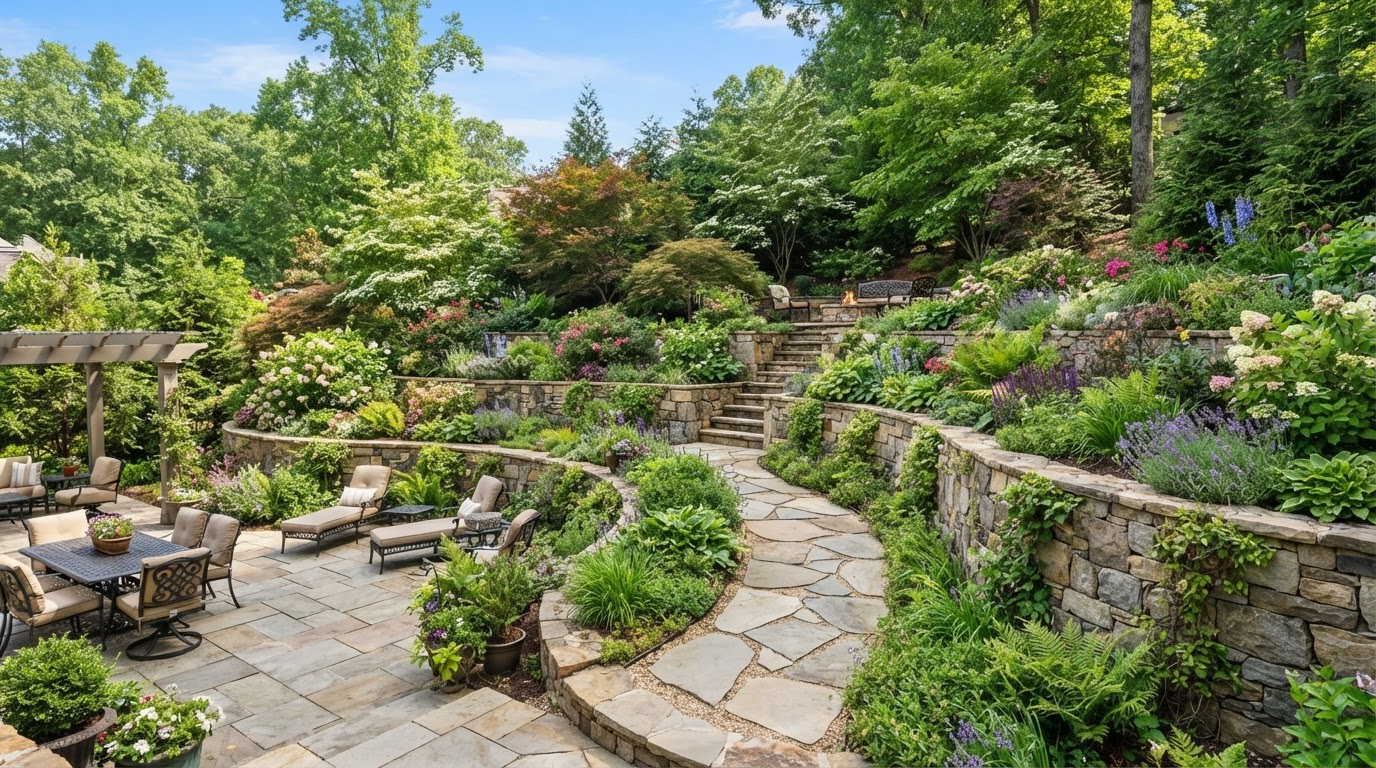
How to Build a Retaining Wall That Lasts
A retaining wall is a structure that holds back earth, not a decoration. Here is how to plan the base, the drainage, and the material so the wall stands for decades instead of leaning and cracking in a few seasons.
Key Takeaways
- The base is everything. A retaining wall without a proper gravel base and drainage will lean, crack, or collapse within a few seasons.
- Drainage behind the wall prevents the hydrostatic pressure that pushes walls over. Without it, water builds up and the wall fails.
- The height determines the engineering. Walls under four feet can often be built with segmental blocks. Taller walls need engineering and often a permit.
- Material choice affects both longevity and look. Segmental block, natural stone, and poured concrete each have different lifespans, costs, and maintenance demands.
How to Build a Retaining Wall That Lasts?
A retaining wall is a structure that holds back soil. It is not a decoration. It carries the weight of the earth behind it, the water that drains through it, and the load above it. A retaining wall built right lasts decades. A retaining wall built wrong leans, cracks, or collapses within a few years. The difference is not the material. It is the base, the drainage, and the engineering. Building a wall that lasts means starting below the ground, not above it.
The most common failure is not the wall itself. It is the base and the drainage. A wall built on uncompacted soil settles and leans. A wall without drainage behind it fills with water, and the water pushes it over. The wall is the part you see. The base and the drainage are the parts that decide whether the wall stands or falls. Skip them, and the wall is temporary, no matter how good it looks on the day it is built.
How Do You Prepare the Base?
The base is a trench filled with compacted gravel, leveled and compacted in lifts. The depth of the trench depends on the wall height, but a rule of thumb is to bury the first course below grade by about ten percent of the wall height. The first course is the foundation, and it has to sit on a solid, level, compacted base, or the wall above it follows the base wherever it settles.
Use crushed gravel, not rounded river stone, because crushed gravel compacts and interlocks, while rounded stone rolls and shifts. Compact the gravel in layers, not all at once, because a thick layer of loose gravel does not compact evenly. Level the base carefully, because a base that is not level produces a wall that is not level, and there is no fixing it after the wall is built. The base is the part you cannot see and the part that matters most.
How Do You Handle Drainage Behind the Wall?
Drainage is what prevents the water pressure that pushes walls over. Soil holds water, and water behind a wall builds hydrostatic pressure that increases with depth. Without a path for the water to drain, the pressure builds until the wall leans or fails. Drainage is not optional. It is the second most important part of the wall, after the base.
Install a layer of free-draining gravel directly behind the wall, with a perforated drain pipe at the bottom that carries water away. The gravel lets water flow down to the pipe instead of building up behind the wall. The pipe carries the water to a daylight outlet or a storm drain. Without the pipe, the water pools at the base of the wall, which is the worst place for it. Without the gravel, the soil against the wall holds water and the pressure builds. Both are needed, and both have to be planned before the wall goes up.
How Tall Can You Build Without Engineering?
Walls under four feet can often be built with segmental retaining wall blocks without a separate engineering design, because the block systems are tested and rated for that height. But local codes vary, and some areas require a permit for any wall over a certain height, often three or four feet. Check the code before you build, because a wall that needs a permit and does not have one is a liability.
Walls over four feet almost always need engineering. The forces on a tall wall are different from a short wall, and the base, the drainage, the reinforcement, and the setback all have to be designed for the specific height and soil conditions. A tall wall built without engineering is a wall that is likely to fail, and the failure of a tall wall is dangerous, not just expensive. The engineering is the protection, and it is not the place to save money.
What Material Should You Choose?
Segmental retaining wall blocks are the most common choice for residential walls. They interlock, they are rated for specific heights, and they are designed to be built without mortar. They come in a range of colors and textures, and they are the fastest and most forgiving material for a homeowner or a contractor to install. They are also the most likely to look generic, because they are the most common.
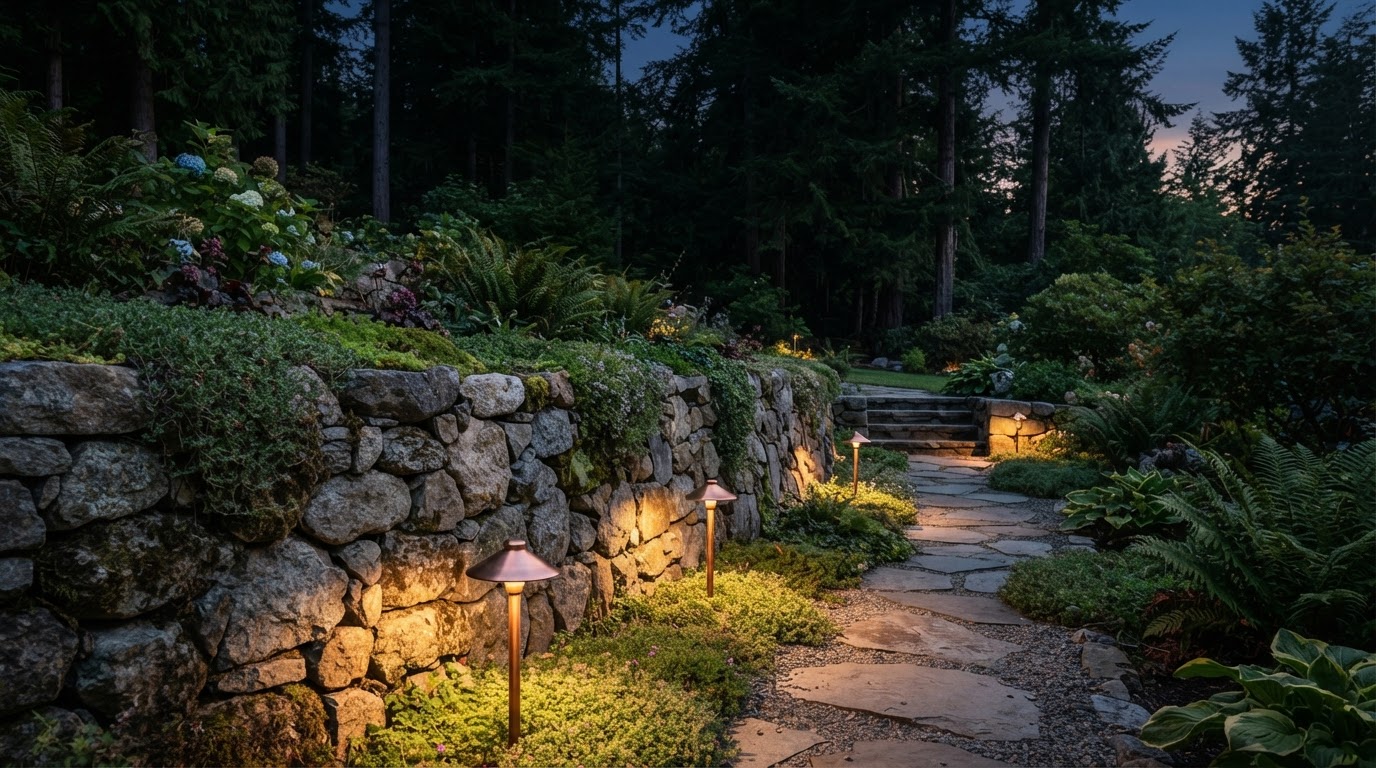
Natural stone is the premium choice. It lasts indefinitely, it looks like it belongs in the landscape, and it does not fade or degrade. It is also the most expensive and the most demanding to install, because each stone is different and the wall is built by fitting them together. Poured concrete is the strongest choice for tall walls, but it needs forms, finishing, and often engineering. Each material has a trade-off between cost, longevity, looks, and installation demands. The right choice depends on the wall, the budget, and the look the owner wants.
How Do You Maintain a Retaining Wall?
A retaining wall built right needs little maintenance, but it needs inspection. Look for leaning, cracking, or bulging, which are signs that the base, the drainage, or the engineering is failing. A wall that leans is a wall that is moving, and movement is the warning before failure. Catch it early and the repair is manageable. Catch it late and the repair is a rebuild.
Keep the drainage clear. The drain outlet should be visible and flowing after rain. If it is blocked, the water builds up behind the wall. Keep the soil above the wall planted, because bare soil erodes and the runoff can overload the drainage. Do not add load above the wall, like a driveway or a structure, without checking that the wall was designed for it. A wall that was built for a planting bed may not carry a parking area. The maintenance is light, but it has to happen, because a retaining wall that is ignored is a retaining wall that fails.
Frequently Asked Questions
How much does a retaining wall cost?
The cost depends on the material, the height, the length, and the site access. Segmental block is the most economical. Natural stone is the most expensive. Taller walls cost more per square foot because of the engineering and the base requirements. The drainage and the base are part of the cost, not extras.
Do I need a permit for a retaining wall?
Often yes, for walls over three or four feet. The height threshold varies by local code. Check with your building department before you start. A wall that needs a permit and does not have one is a liability and may need to be removed.
Why do retaining walls fail?
Almost always because of the base or the drainage. A wall built on uncompacted soil settles and leans. A wall without drainage behind it fills with water and the pressure pushes it over. The wall itself is rarely the failure. The parts you cannot see are the parts that fail.
Can I build a retaining wall myself?
Short walls, under three feet, can be a DIY project with segmental blocks, if the base and the drainage are done right. Taller walls need engineering and professional installation, because the forces and the failure risks are higher. The base and the drainage are not optional, even for a short wall.
How long does a retaining wall last?
A wall built with a proper base and drainage lasts decades. Segmental block walls last 50 years or more. Natural stone lasts indefinitely. Poured concrete lasts a century. A wall built without a base or drainage may fail within a few years. The lifespan is determined by the construction, not the material.
Keep Reading

Plan your project
Use the Project Planner to get a plan outline for your project type, with steps and questions to ask.
Start Your Plan