
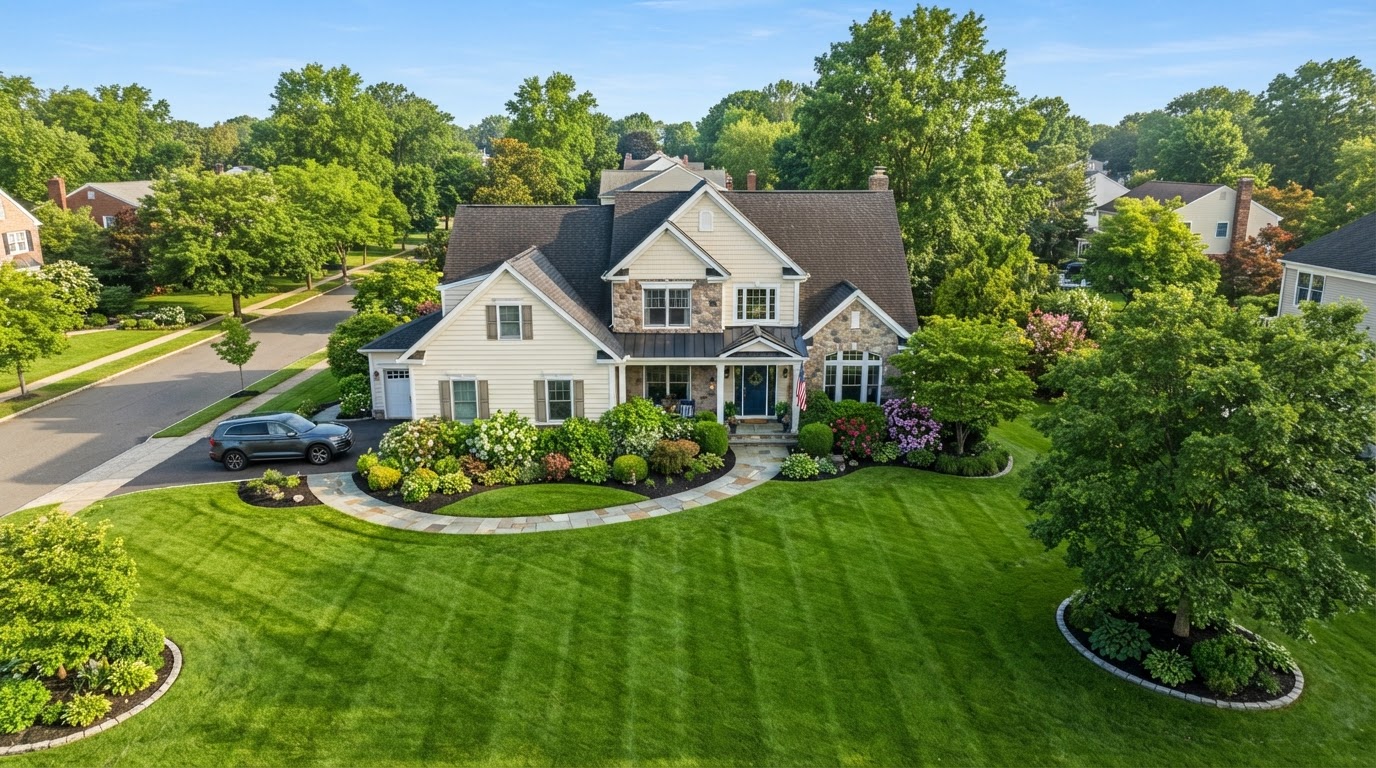
How to Choose the Right Trees for Your Yard
A tree is the longest-lived and most expensive planting decision in your yard. Here is how to choose the right species, the right size, and the right spot so it thrives for decades.
Key Takeaways
- The right tree starts with the right spot. Sun, soil, drainage, and overhead clearance decide which species will thrive and which will struggle.
- Mature size matters more than the size you buy. A tree that fits the space at the nursery may outgrow the yard in ten years and damage foundations, fences, or overhead lines.
- Native and climate-adapted species need less water, fewer chemicals, and less maintenance, and they support the local ecosystem that a non-native tree does not.
- A larger caliper tree gives instant impact but costs more and takes longer to establish. A smaller tree catches up in a few years and often outgrows the larger one.
How to Choose the Right Trees for Your Yard?
A tree is the biggest and longest-lived planting decision you will make in your yard. A shrub you can dig up and move. A perennial you can replace in a season. A tree is a 30 to 50 year commitment, and the wrong tree in the wrong spot is a problem you will live with for as long as you own the home. Choosing the right tree is not about picking the one that looks best at the garden center. It is about matching the tree to the spot, the soil, the climate, and the way you use the yard, so the tree thrives and adds value instead of becoming a liability.
The decision comes down to four things: the spot, the species, the size, and the maintenance. Get the spot right and the tree has a chance. Get the species right and the tree thrives. Get the size right and the tree establishes well. Get the maintenance right and the tree stays healthy for decades. Miss any one and the tree struggles, no matter how much you spent on it.
How Do You Read the Spot Before You Choose a Tree?
The spot is the single most important factor, and it is the one most people skip. Walk the yard at different times of day and note how much sun the spot gets. A tree that needs full sun will not thrive in the shade of the house. A tree that needs shade will scorch in the afternoon sun. Six to eight hours of direct sun is full sun. Four to six is partial shade. Less than four is shade, and the species you choose has to match or the tree will fail no matter how well you plant it.
Check the soil. Dig a small hole and look at what is there. Sandy soil drains fast and dries out. Clay soil holds water and can drown roots. Loam is the middle ground and the one most trees prefer. A simple drainage test, filling the hole with water and timing how long it takes to drain, tells you whether the spot will hold water after rain. A spot that stays wet is a spot for a willow or a bald cypress, not a dogwood.
Look up and look down. Overhead power lines, roof eaves, and the neighbor's fence all limit the mature height of the tree you can plant. Underground, the septic field, the gas line, and the foundation all limit where you can dig. A tree that grows into the power line is a tree the utility will butcher. A tree that grows into the foundation is a tree that cracks it. The mature size, not the nursery size, is what you are planning for.
Native or Non-Native: Which Tree Is the Better Choice?
Native and climate-adapted trees are almost always the better choice for a homeowner. They evolved in your region, so they are adapted to the rainfall, the temperature swings, and the soil. They need less water once established, fewer fertilizers and pesticides, and less pruning. They also support the local birds, pollinators, and insects that a non-native tree does not, which means they contribute to the yard's ecosystem instead of sitting in it as decoration.
Non-native trees are not always wrong. A non-native that is well adapted to your climate can thrive, and some non-natives offer a look or a function that a native cannot. But a non-native that is poorly adapted is a tree that will need constant watering, feeding, and protection, and it may still struggle. The rule is to start with native and climate-adapted species, and choose a non-native only when it offers something the native options do not and you are willing to maintain it.
Ask your local extension office or a reputable nursery for the species that do well in your zip code. The tree that is common in your neighborhood is common for a reason. It thrives there. The tree that nobody in your neighborhood grows is a tree that probably does not thrive there, and you do not want to be the test case.
What Size Tree Should You Buy?
The size you buy is a trade-off between instant impact and long-term health. A large caliper tree, the one that fills the space the day it is planted, costs more, takes longer to establish, and is more likely to fail in the first year. Its root system was cut to fit the ball, and the tree spends its first years regrowing roots instead of growing canopy. A smaller tree, a five or ten gallon container, costs less, establishes faster, and often catches up to the larger tree within three to five years because it spends its energy growing instead of recovering.
The exception is when you need immediate screening or shade. A large tree is the right choice when the purpose is to block a view or shade a patio this year, not in five years. In that case, buy the larger tree, plant it correctly, and water it religiously for the first two years, because the larger tree needs more water and more care to establish than the smaller one.
For most homeowners, the sweet spot is a 15 to 25 gallon container. It is large enough to have presence, small enough to establish well, and priced in the range that does not make you afraid to plant it. The tree that is too expensive to lose is the tree that gets over-cared for and over-watered, which kills it as surely as neglect.
How Do You Plant a Tree So It Survives?
Planting is where most trees fail, and most failures come from planting too deep. The root flare, the point where the trunk widens at the base, should be at or slightly above the soil line. A tree planted with the flare below the soil is a tree that suffocates, because the roots need oxygen and the bark rots when it is buried. Dig the hole two to three times as wide as the root ball, but no deeper. The wide hole is for the roots to spread into loose soil. The shallow depth is for the root flare to sit at the right level.
Do not amend the soil in the hole with compost or fertilizer. A hole full of rich soil is a pot, and the roots will circle inside it instead of spreading into the surrounding soil. Backfill with the native soil, water deeply, and mulch with two to three inches of mulch in a ring, not a volcano. Mulch piled against the trunk is the second most common way trees die, because the bark rots under the mulch. Keep the mulch a few inches from the trunk and spread it to the drip line.
Water is the make-or-break for the first two years. A newly planted tree needs deep, regular watering for the first growing season, and supplemental water in the second. A tree that is watered deeply and less often develops deep roots. A tree that is watered shallowly and often develops shallow roots and depends on the watering forever. The goal is a tree that is independent of irrigation by the third year, and that only happens with deep watering from the start.
How Do You Care for a Tree Over Time?
A tree that is well chosen and well planted needs less care than any other plant in the yard, but it is not care-free. Prune dead, damaged, and crossing branches in the dormant season, not in summer. A young tree needs structural pruning in the first few years to build a strong scaffold, which prevents the branch failures that cost thousands to fix on a mature tree. A mature tree needs an occasional check by an arborist, because the tree that looks fine may have a crack or a disease that an arborist catches before it becomes a hazard.
Water during droughts, even on established trees. A tree that is five years old can still stress in a dry summer, and a stressed tree is a tree that is vulnerable to pests and disease. Mulch once a year to hold moisture and protect the roots, but never pile it against the trunk. Fertilize only if a soil test says the tree needs it, because a tree that is over-fertilized is a tree that grows weak, fast wood that breaks in wind and ice.
The tree that is cared for in the first five years is the tree that thrives for the next fifty. The tree that is neglected in the first five is the tree that never establishes, and no amount of care later can fix a root system that never developed. The early years are the investment, and the payoff is a tree that adds value, shade, and beauty to the yard for as long as you own the home.
Frequently Asked Questions
How far from the house should I plant a tree?
The distance depends on the mature canopy width, not the size at planting. A small tree, one with a mature spread of 15 feet, can go 8 to 10 feet from the foundation. A large tree, one with a mature spread of 40 feet, should be at least 20 feet from the house. The root spread is wider than the canopy, so planting too close risks the roots and the branches both. When in doubt, plant farther, because a tree cannot be moved once it is established.
What is the fastest growing shade tree for a residential yard?
Fast-growing shade trees include maple, tulip poplar, and some oaks, but fast growth comes with a trade-off. Fast-growing trees tend to have weaker wood that breaks in storms and shorter lifespans. A red maple or a willow oak gives shade in five to seven years and is sturdy enough for a residential yard. Avoid Bradford pear and silver maple, which grow fast but split easily in wind and ice. The best shade tree is one that grows at a moderate rate and lives for 50 years, not one that grows fast and fails in 15.
Should I stake a newly planted tree?
Stake only if the tree cannot stand on its own or the site is windy. A tree that stands upright without stakes develops a stronger trunk, because the wind is what builds the trunk strength. If you must stake, use loose ties that allow the tree to sway, and remove the stakes after one growing season. Stakes left on too long girdle the trunk and weaken the tree, which is the opposite of what they were installed to do.
How much does a tree cost to have planted?
The cost depends on the tree size, the species, and the site access. A 15 gallon container tree planted by a landscape firm typically runs in the low hundreds for the tree and the planting. A large caliper tree, installed, can run into the thousands. The cost of the tree is a fraction of the lifetime cost, because the watering, the pruning, and the eventual arborist care add up. Choose the tree for the spot, not the price, because the wrong tree in the right price is the most expensive tree you can buy.
Can I plant a tree in the fall or winter?
Fall is the best time to plant most trees, because the air is cool, the soil is still warm, and the roots can establish without the stress of summer heat. Spring is the second best. Summer planting is possible but stressful and requires diligent watering. Winter planting works for dormant, balled-and-burlapped trees in mild climates, but the ground must not be frozen. Avoid planting in the heat of summer unless you have no choice, and water twice as often if you do.
Keep Reading
Plan your project
Use the Project Planner to get a plan outline for your project type, with steps and questions to ask.
Start Your Plan