
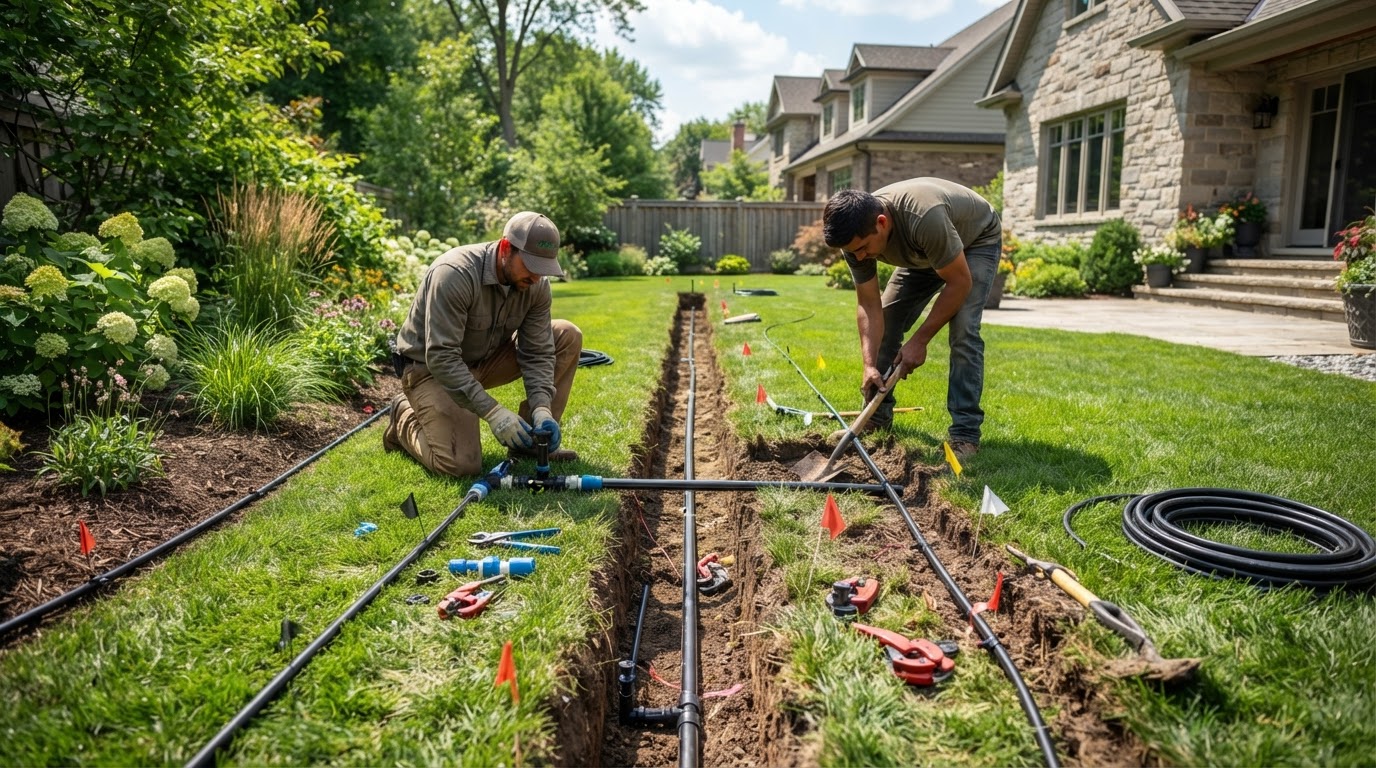
How to Design a Backyard Irrigation System
A good irrigation system keeps your yard alive during a drought and saves water the rest of the time. Here is how to plan, zone, and install one that works for years.
Key Takeaways
- An irrigation system is a water delivery network, and the design starts with the water source, the zones, and the controller that runs them.
- Zoning is how you match water to plants. Different plants need different amounts, and putting them on one zone means some drown while others dry out.
- Drip irrigation uses less water and delivers it to the roots, while spray covers more ground but loses water to wind and evaporation.
- A smart controller with a rain sensor cuts water waste by 30 to 50 percent and pays for itself in one to two seasons.
How to Design a Backyard Irrigation System?
An irrigation system is the difference between a yard that survives a drought and one that does not, and it is the difference between a water bill that stays flat and one that spikes every summer. A good system delivers the right amount of water to the right place at the right time, and it does it automatically so the yard is cared for even when you are not home. Designing one is not about buying parts. It is about understanding your yard, your water, and your plants, and building a system that matches all three. The system that is too small leaves the yard brown. The system that is too large wastes water and money. The system that is designed right does neither.
The design comes down to four decisions: the water source, the zones, the delivery method, and the controller. Get the source right and the system has enough water. Get the zones right and each plant gets what it needs. Get the delivery right and the water goes where it should. Get the controller right and the system runs itself. Miss any one and the system either wastes water or starves the yard.
How Do You Choose the Right Water Source for Irrigation?
The water source is the first decision, and it determines what the rest of the system looks like. Municipal water is the easiest and most reliable, but it costs money and may have pressure limits. A well or a pump from a pond is free after the setup but depends on the water table and the pump size. Rainwater collection is the most sustainable but depends on your rainfall and your storage capacity. The source has to match the demand, and the demand is the total water the yard needs in the peak week of summer, not the average week.
Measure the pressure and the flow at the source before you design anything. A system that needs 30 gallons per minute and a source that delivers 10 is a system that will never work, no matter how good the parts are. A pressure gauge on the outdoor spigot tells you what the system has to work with, and a bucket and a stopwatch tell you the flow rate. The design that does not start with these numbers is the design that is built on guesses, and the design built on guesses is the design that gets rebuilt.
How Do You Zone an Irrigation System for Different Plants?
Zoning is how you group plants by their water needs and put each group on its own valve. A lawn needs more water than a drought-tolerant shrub bed, and if they share a zone, the lawn gets too little and the shrubs get too much, or the lawn gets enough and the shrubs drown. The zones are the map of the yard's water needs, and the number of zones depends on how different the plantings are. A yard with all the same plants needs one zone. A yard with lawn, shrubs, trees, and a vegetable garden needs four or more.
Each zone gets a valve, and each valve gets a timer or a controller that tells it when to run and for how long. The timer is not a guess. It is set based on the plants, the soil, the sun, and the season. A zone in full sun with sandy soil needs more water, more often, than a zone in shade with clay soil. The timer that is set the same for every zone is the timer that overwaters half the yard and underwater the other half. Adjust each zone to the plants in it, and adjust the schedule with the seasons, because the yard that needs 30 minutes in July needs 10 in September.
Drip or Spray: Which Delivery Method Is Right for Each Zone?
Drip irrigation delivers water slowly and directly to the root zone through tubes and emitters. It uses 30 to 50 percent less water than spray, because the water goes to the roots and not the air, the leaves, and the pavement. Drip is the right choice for shrub beds, trees, vegetable gardens, and any planting where the water needs to get to the roots without wetting the foliage. The disadvantage is that drip lines are visible on the surface or buried shallow, and they can be damaged by digging or foot traffic.
Spray irrigation throws water through the air to cover a wide area, and it is the right choice for lawns and ground covers where the water needs to cover the surface evenly. The disadvantage is that spray loses water to wind and evaporation, and it wets the foliage, which can promote disease on some plants. The best systems use both, with spray for the lawn and drip for the beds, because the delivery method should match the plant, not the other way around.
How Do You Choose and Set Up the Controller?
The controller is the brain of the system, and it is the part that turns the water on and off. A basic controller runs each zone on a fixed schedule, which is simple but wastes water when it rains or when the soil is already wet. A smart controller with a rain sensor skips watering when it rains, and a soil sensor skips watering when the soil is still moist. The smart controller cuts water waste by 30 to 50 percent and pays for itself in one to two seasons, because the water it saves is the water you do not pay for.
Set the controller to water early in the morning, before sunrise, because the air is cool and the wind is calm, so the water soaks in instead of evaporating. Water deeply and less often, because deep watering builds deep roots and shallow watering builds shallow roots that depend on the system. The goal is a yard that can go a day or two without water and not stress, and that only happens with deep, infrequent watering from the start.
How Do You Maintain an Irrigation System Over Time?
An irrigation system is not install-and-forget. The heads clog, the lines leak, and the controller battery dies. Check the system at the start of each season by running each zone and walking the yard to look for dry spots, overspray, and leaks. A dry spot means a clogged head or a broken line. Overspray means a head that needs adjusting. A leak means a fitting that needs tightening or replacing. The five-minute check at the start of the season is the check that saves the yard in the middle of summer.
Winterize the system before the first freeze. Drain the lines, shut off the water, and protect the backflow preventer. A system that is not winterized is a system that freezes and cracks, and the cracked line is the line that floods the yard or the basement in the spring. The winterization takes 30 minutes and saves the cost of a full system replacement, which is what a frozen system often needs.
Frequently Asked Questions
How much does a backyard irrigation system cost?
The cost depends on the yard size, the number of zones, and the delivery method. A basic spray system for a small yard starts in the low thousands. A multi-zone system with drip and spray, a smart controller, and a rain sensor runs higher. The cost of the system is a fraction of the cost of the water it saves and the plants it keeps alive, because a yard that loses plants to drought costs more to replace than the irrigation system that would have saved them.
Can I install an irrigation system myself?
A homeowner can install a simple drip system for a shrub bed or a vegetable garden, but a whole-yard system with multiple zones, a controller, and a backflow preventer is best left to a professional. The professional installation is not just about the parts. It is about the design, the zoning, the pressure, and the code compliance, and a system that is not designed right or not up to code is a system that wastes water and may not pass inspection.
How often should I run my irrigation system?
The schedule depends on the plants, the soil, the sun, and the season. A lawn in full sun with sandy soil may need 20 to 30 minutes every other day in summer. A shrub bed in shade with clay soil may need 15 minutes once a week. The rule is to water deeply and less often, and to adjust the schedule with the seasons. The system that runs the same schedule in April and July is the system that wastes water in April and starves the yard in July. A smart controller with a soil sensor adjusts automatically, which is why it pays for itself.
Does an irrigation system increase my water bill?
An irrigation system increases the water bill, but it often decreases the total cost of owning the yard. The water bill goes up because the yard is getting watered consistently. The cost of replacing dead plants, resodding dead lawn, and the time spent hand-watering goes down. and those costs are usually higher than the water the system uses. A well-designed system with a smart controller and drip irrigation uses less water than hand-watering, because the water goes to the roots and not the air.
What is a rain sensor and do I need one?
A rain sensor is a small device that tells the controller to skip watering when it has rained enough. It is the single highest-return upgrade on any irrigation system, because it stops the system from watering during and after rain, which is the most common form of water waste. A rain sensor pays for itself in one season on most systems, and it is required by code in many areas. If your controller does not support one, upgrade the controller, because the water it saves is the water you do not pay for.
Keep Reading

Plan your project
Use the Project Planner to get a plan outline for your project type, with steps and questions to ask.
Start Your Plan