
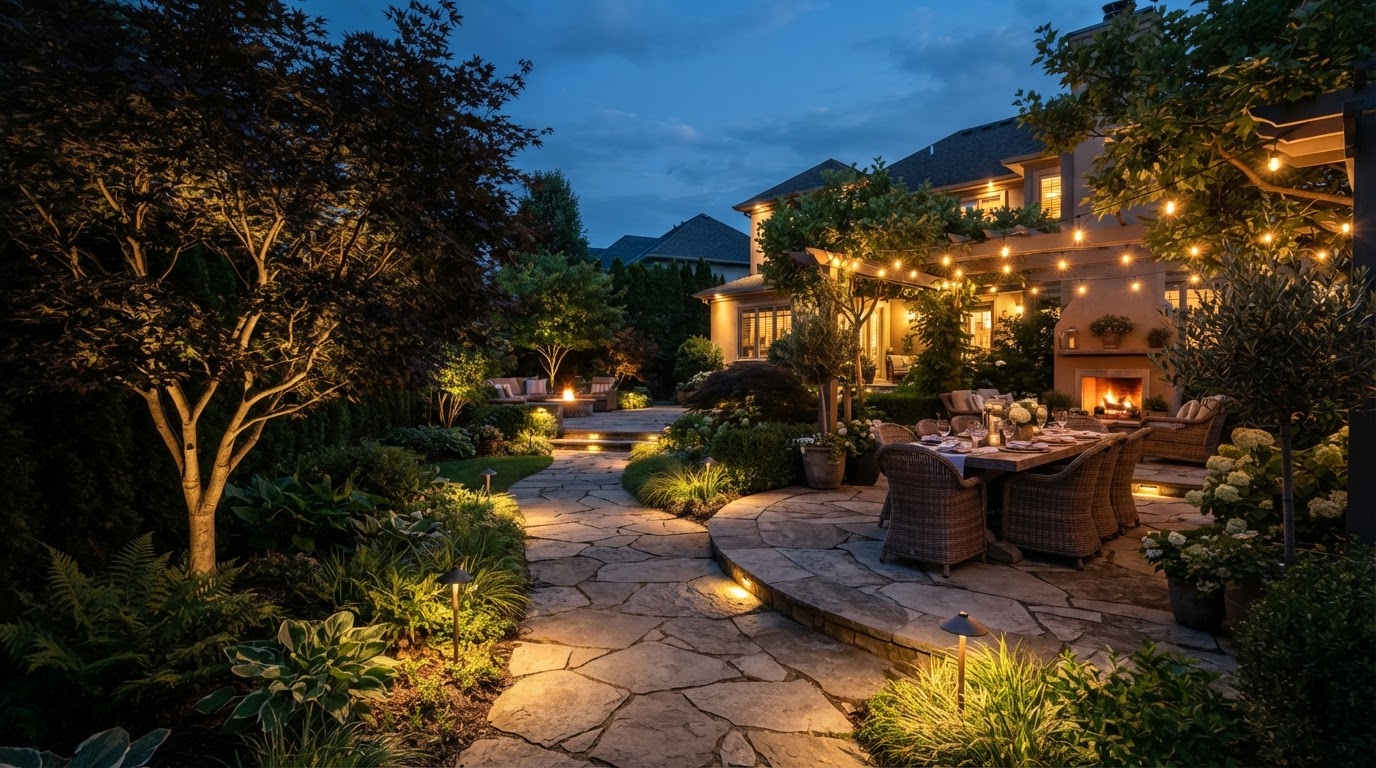
How to Plan a Backyard Sound System Without Ruining the Vibe
Outdoor sound is about placement and coverage, not volume. Here is how to plan a system that fills the yard with even sound and disappears into the landscape.
Key Takeaways
- Outdoor sound is about even coverage, not volume. The goal is the same level everywhere, not loud near the speakers and quiet at the edges.
- Use weather-rated speakers designed for outdoor use. Indoor speakers fail fast outside, even under cover.
- Plan speaker placement for coverage, not for hiding. A speaker aimed wrong to keep it out of sight sounds wrong.
- Run the wiring before the landscape goes in. Retrofitting wire through finished hardscape and planting is expensive and disruptive.
How to Plan a Backyard Sound System Without Ruining the Vibe?
A backyard sound system should fill the yard with even, clear sound at a comfortable level and then disappear. The goal is not to reproduce a concert. It is to create a background of sound that makes the yard feel alive without making it feel like a venue. Planning it well means thinking about coverage, placement, and wiring before you think about speakers.
The most common mistake is buying one powerful speaker and pointing it at the yard. The result is loud near the speaker and quiet everywhere else, with distortion at the edges and complaints from the neighbors. A good outdoor system uses multiple smaller speakers placed for coverage, so the sound is even from one end of the yard to the other.
How Do You Plan Speaker Placement for Even Coverage?
Think in zones. A patio, a pool deck, a lawn, and a garden each need their own coverage. Place speakers so their sound fields overlap slightly, with no dead spots between them. The spacing depends on the speaker, but a typical outdoor speaker covers a 20 to 30 foot arc. Place the first pair on the patio aimed across the seating area, and add pairs for each additional zone.
Aim speakers down and across, not up. Sound aimed up into the sky is lost, and sound aimed at the neighbor's window is a problem. Speakers mounted under eaves or on posts should be angled slightly down so the sound reaches the ground where people sit. The height matters too. Speakers at 8 to 10 feet cover more ground than speakers at 5 feet, and they are less likely to be in someone's line of sight.
What Speakers Should You Use?
Use speakers rated for outdoor use, with weather-resistant cabinets, grilles, and drivers. Indoor speakers fail fast outside, even under a covered patio, because humidity and temperature swings corrode the components. Look for speakers with a IP rating or a manufacturer warranty that covers outdoor use.
Choose the speaker type for the zone. Surface-mount speakers under eaves work for patios and covered areas. In-ground speakers on stakes work for lawns and garden beds. Rock speakers blend into planting beds. Surface and in-ground speakers can be mixed in one system as long as they are on separate volume zones, because they need different levels to sound balanced.
How Do You Power and Wire the System?
Run the speaker wire before the landscape goes in. Buried wire is cheap during construction and expensive after. Use direct-burial rated wire, buried at least 6 inches deep in conduit where it crosses hardscape. The wire run from the amplifier to the speakers should be planned to minimize length, because long runs lose power and quality.
The amplifier lives indoors or in a weatherproof enclosure. Do not put a standard amplifier outside. A dedicated outdoor amplifier or a multi-zone receiver with outdoor-rated outputs is the right choice. For larger systems, a matrix amplifier lets you play different sources in different zones, so the patio can have dinner music while the pool deck has something else.
How Do You Control the System?
Modern outdoor systems are controlled from a phone or a wall keypad. A streaming amplifier with Wi-Fi lets you pick the source, the zone, and the volume from an app. This is far more convenient than walking to an amplifier, and it lets you control the yard from the patio or the kitchen.
Plan for zone volume control. The patio, the pool, and the garden need different levels, because the distance from the speaker to the listener is different. A system with independent zone volume lets you balance the sound so no zone is too loud or too quiet. Without zone control, you end up setting the whole system to the level of the loudest zone, which is usually too loud for everyone else.
How Do You Keep the Sound From Bothering the Neighbors?
Neighbor complaints are the number one reason outdoor sound systems get turned off. The fix is placement and level. Aim speakers into your yard, not toward the property line. Use more speakers at a lower volume rather than fewer speakers at a higher volume, because lower-volume sound does not carry as far over the property line.
Set a reasonable maximum level. An outdoor system is for background, not for a party that shakes the block. If you want louder sound for an event, use a portable speaker you can bring inside when the night ends. A permanent outdoor system that is always loud is a permanent neighbor problem.
How Do You Maintain an Outdoor Sound System?
Outdoor speakers need seasonal inspection. Check the grilles for corrosion, the mounts for looseness, and the wire connections for water damage. Wipe the drivers with a dry cloth. A speaker that is mounted securely and protected from direct rain can last 10 years or more.
The amplifier needs no outdoor maintenance if it lives indoors. If it is in a weatherproof enclosure, check the enclosure seals annually. The most common failure in outdoor systems is a connection that let water in, not a speaker that failed. Inspect the connections at the speakers every spring, and replace any corroded connectors before they cause a failure mid-summer.
Frequently Asked Questions
How much does a backyard sound system cost?
A basic two-speaker patio system costs far less than a multi-zone system covering a large yard. The cost is driven by the number of zones, the speaker quality, the wiring runs, and the amplifier. Plan the system with the landscape, not after, to keep wiring costs down.
Can I use Bluetooth speakers instead of a wired system?
For a small patio, yes. For a full yard, no. Bluetooth speakers are portable but they do not provide even coverage across a large space, and they need charging. A wired system with multiple speakers is the right choice for a yard you want to use every day.
Do outdoor speakers need to be under cover?
No, if they are rated for outdoor use. Weather-rated speakers are designed to handle rain, sun, and temperature swings. Speakers under cover last longer, but outdoor-rated speakers in the open are built for it.
Can I add a sound system to an existing yard?
Yes, but it is more disruptive. Trenching for wire through existing hardscape and planting is the main cost. Low-voltage wire can sometimes be run along surfaces or shallow trenched to minimize damage. Plan the runs to avoid mature plants and hardscape where possible.
How many speakers do I need for my yard?
One pair for a patio, and one pair for each additional zone like a pool deck or lawn. The goal is even coverage, not loud volume. More speakers at lower volume sound better and bother the neighbors less than fewer speakers at higher volume.
Keep Reading
Plan your project
Use the Project Planner to get a plan outline for your project type, with steps and questions to ask.
Start Your Plan