
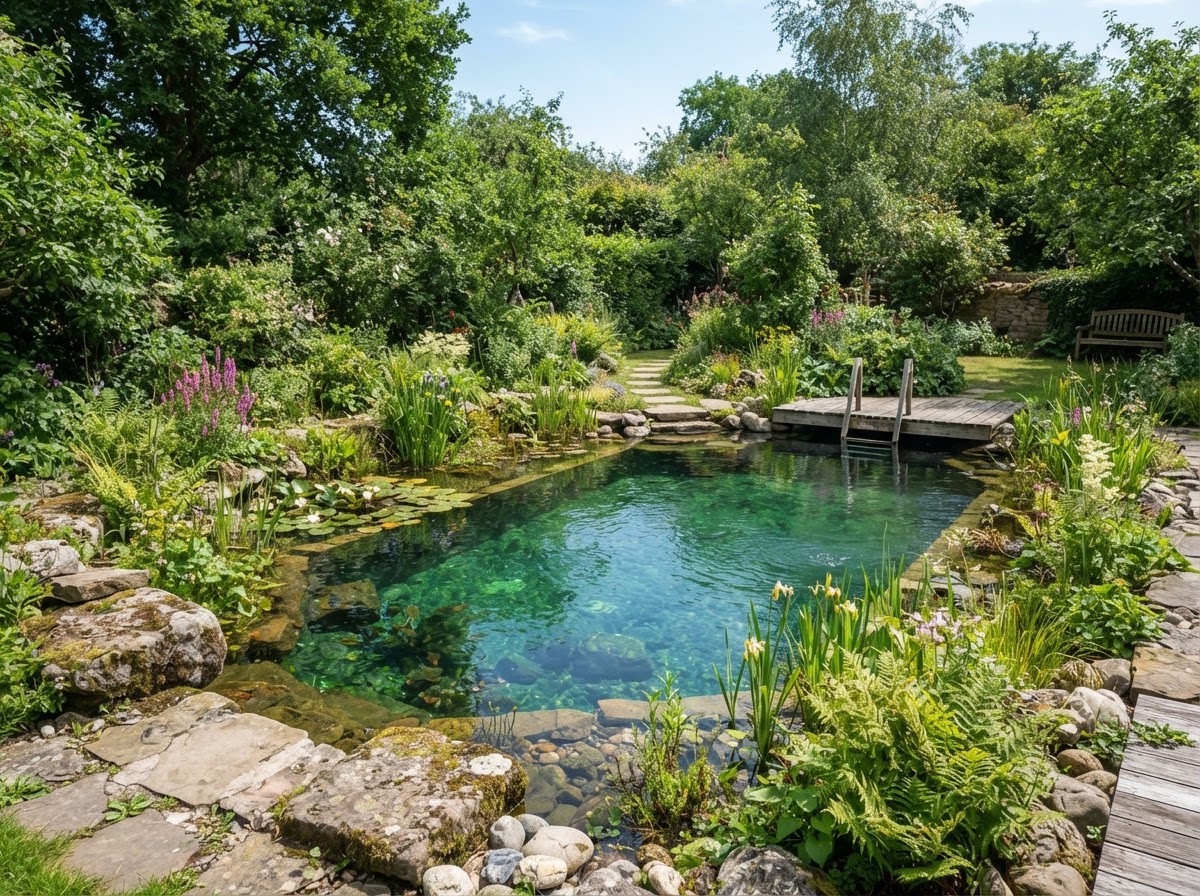
How to Plan a Natural Swimming Pond for Your Backyard
A natural swimming pond is a pool that cleans itself with plants instead of chemicals. Here is how to plan one that looks like it was always part of your yard.
Key Takeaways
- A natural swimming pond is a pool that uses plants, gravel, and biology to keep the water clean instead of chlorine, and it looks like a pond rather than a pool.
- The pond has two zones: a swimming zone where you swim and a regeneration zone where plants filter the water. Both have to be sized to match each other.
- The cost is comparable to a high-end gunite pool, but the pond adds wildlife, ecosystem, and a natural aesthetic that a pool cannot.
- Maintenance is different, not less. The pond needs plant management, water testing, and seasonal care instead of chemicals and a pool robot.
How to Plan a Natural Swimming Pond for Your Backyard?
A natural swimming pond is a pool that cleans itself with plants, gravel, and beneficial bacteria instead of chlorine, and it is the pool for the homeowner who wants to swim in water that feels like a mountain lake, not a chemical bath. The pond looks like it grew out of the landscape, because it is built to look like one, with stone edges, native plants, and water that is clear because it is alive, not because it is sterilized. Planning one is not about digging a hole and adding plants. It is about designing a living ecosystem that keeps itself clean, and the system that is designed right is the system that stays clear and swimmable for years. The system that is designed wrong is the system that turns green and stays green.
The planning comes down to four decisions: the size and the zoning, the location and the sun, the construction method, and the planting plan. Get the size and zoning right and the pond is swimmable and clean. Get the location right and the pond warms naturally and the plants thrive. Get the construction right and the pond holds water and lasts. Get the planting right and the regeneration zone does the work the filter would otherwise do. Miss any one and the pond is a project that becomes a problem.
How Do You Size a Natural Swimming Pond and the Regeneration Zone?
The swimming pond has two zones, and the size of each determines the other. The swimming zone is the deep, open area where you swim, and the regeneration zone is the shallow, planted area where the water is cleaned. The regeneration zone needs to be 30 to 50 percent of the total water area, because the plants and the gravel in that zone are the filter that keeps the swimming zone clean. A pond with a swimming zone of 200 square feet needs a regeneration zone of 100 to 150 square feet, and the total water area is 300 to 350 square feet. The pond that skimps on the regeneration zone is the pond that cannot keep itself clean, and the pond that over-builds it is the pond that is more garden than pool.
The depth of the swimming zone is six to eight feet, the same as a conventional pool, because the depth gives you room to swim and helps the water stay thermally stable. The regeneration zone is shallow, two to three feet, because the plants that clean the water grow in shallow water and the shallow depth lets the sunlight reach them. The two zones are separated by a wall that lets water flow between them but keeps the plants on their side, and the flow is what keeps the whole system alive. The water circulates from the swimming zone through the regeneration zone and back, and the plants and the gravel strip the nutrients and the sediment out of the water on every pass.
Where Should a Natural Swimming Pond Go in the Yard?
The location of a natural swimming pond is the decision that determines whether it thrives or struggles, because the pond is a living system and it needs sun. The regeneration zone needs six to eight hours of direct sun a day, because the plants that filter the water are water plants and they need sunlight to photosynthesize and grow. A pond in full shade is a pond whose regeneration zone cannot do its job, and the pond whose filter does not work is the pond that turns green. The swimming zone can take some shade, but the regeneration zone cannot, and the location that puts the plants in the sun is the location that keeps the water clear.
The other location factor is the distance from trees. A pond under a large tree is a pond that catches leaves, and the leaves that fall into the pond add nutrients and organic matter that the system has to process. A few leaves are fine. A pond under a canopy that drops leaves every autumn is a pond that needs a skimmer and a net and more maintenance, because the organic load overwhelms the regeneration zone. Choose a location with sun and open sky above, and the pond will be easier to maintain and clearer to swim in.
How Is a Natural Swimming Pond Built?
The construction of a natural swimming pond is closer to a gunite pool than a liner pond, because the pond needs to hold water reliably for decades and the structure has to be solid. The most common construction method is a concrete or gunite shell with a waterproof membrane, because the shell is durable, can be shaped to any form, and does not flex or tear the way a liner does. The shell is excavated, shaped with the swimming zone and the regeneration zone, coated with a waterproofing layer, and finished with stone or gravel on the regeneration side and a smooth finish on the swimming side.
The circulation system is the other half of the construction. A pump moves water from the swimming zone through the regeneration zone and back, and the flow rate is calculated to turn over the entire water volume every few hours. The pump runs on a timer, and the system includes a skimmer for surface debris and a return that pushes the cleaned water back into the swimming zone. The system that is undersized is the system that cannot keep up with the load, and the system that is oversized is the system that uses more electricity than it needs to. The right pump, the right flow, and the right plumbing are the parts that make the ecosystem work.
What Plants Go in the Regeneration Zone?
The plants in the regeneration zone are the filter, and the choice of plants is the choice that determines how well the filter works. The best plants are native water plants that are adapted to the local climate, because the plants that are adapted to the area are the plants that survive the winter, thrive in the summer, and do the work without constant replacement. Water irises, rushes, sedges, and water lilies are common choices, because they grow in shallow water, root in the gravel, and absorb the nutrients that would otherwise feed algae. The planting plan that mixes tall, medium, and floating plants is the plan that filters at every level of the water column.
The gravel in the regeneration zone is the other half of the filter, because the gravel provides the surface area where the beneficial bacteria live. The bacteria are the organisms that break down the organic matter and convert it into the nutrients the plants absorb, and the gravel is the home they live on. The gravel should be clean, rounded river stone, not crushed gravel with sharp edges, because the rounded stone is easier to clean and does not compact the way crushed gravel does. The gravel is the invisible filter, and the plants are the visible one, and both have to be in the regeneration zone for the system to work.
How Do You Maintain a Natural Swimming Pond Over Time?
A natural swimming pond does not need chlorine, but it does need care, and the care is different from a conventional pool. The weekly maintenance includes skimming leaves and surface debris, checking the water clarity, and confirming the pump and the circulation are running. The monthly maintenance includes testing the water for pH and nutrient levels, because the pond is a living system and the water chemistry tells you whether the system is in balance. The pond that is tested monthly is the pond that is adjusted before it goes out of balance, and the pond that is not tested is the pond that turns green and stays green until someone figures out why.
The seasonal maintenance includes cutting back the plants in the regeneration zone in the fall, because the plants that die back in winter drop their leaves into the water if they are not trimmed, and the leaves add the organic load that the system has to process in the spring. The pond is also winterized like a pool, with the water level adjusted and the pump either run at a low flow to keep the water moving or drained and stored depending on the climate. The pond that is maintained through the seasons is the pond that stays clear and swimmable year after year, and the pond that is not is the pond that becomes a project that costs more to fix than it would have cost to maintain.
Frequently Asked Questions
How much does a natural swimming pond cost?
The cost is comparable to a high-end gunite pool, and it is often higher, because the regeneration zone doubles the water area and the planting adds to the construction cost. The cost factors are the size, the construction method, the planting density, and the circulation system. A natural swimming pond costs more than a basic vinyl pool and about the same as a high-end gunite pool with a similar footprint. The cost of the pond is the cost of a pool plus the cost of a water garden, and the value is a pool that looks like it belongs in the landscape instead of a pool that looks like it was dropped into it.
Can you really swim in a natural swimming pond without chemicals?
Yes. The water in a well-designed natural swimming pond is clean and clear without chlorine, because the plants and the beneficial bacteria in the regeneration zone filter the water the way a wetland filters a lake. The water is tested for safety, and the pH and the bacterial levels are maintained by the ecosystem. The pond that is designed with the right regeneration zone, the right circulation, and the right planting is the pond that stays clean and swimmable without chemicals. The pond that is undersized or poorly designed is the pond that does not, which is why the design matters more than the construction.
Does a natural swimming pond attract mosquitoes?
A natural swimming pond with circulating water does not attract mosquitoes, because mosquitoes breed in still, stagnant water, not in moving water. The circulation system keeps the water moving, and the fish and the beneficial insects in the pond eat the larvae that do appear. The pond that has stagnant water is the pond that attracts mosquitoes, and that is the pond with a broken pump or a dead circulation system. The pond that is running is the pond that does not breed mosquitoes, because the moving water is the mosquito's enemy.
Can I convert my existing pool to a natural swimming pond?
An existing gunite pool can be converted to a natural swimming pond by adding a regeneration zone, a circulation system, and a planting plan, but the conversion is a significant project that costs more than building a pond from scratch in some cases. The conversion works best when the pool is large enough to add a regeneration zone alongside it, or when the yard has room to build a separate regeneration zone connected by plumbing. A vinyl or fiberglass pool is harder to convert, because the shell is not as flexible for adding the planted zone. The conversion is possible, but it is a project that needs a professional design before it starts.
How long does a natural swimming pond last?
A natural swimming pond built with a concrete or gunite shell lasts as long as a conventional gunite pool, which is 30 to 50 years with proper maintenance. The regeneration zone and the planting need seasonal care, and the pump and the circulation system need periodic replacement, but the structure itself is permanent. The pond that is maintained through the seasons is the pond that lasts for decades, and the pond that is neglected is the pond that fails early, because the ecosystem needs care the way any living system does. The lifespan is determined by the maintenance, not the construction.
Keep Reading
Plan your project
Use the Project Planner to get a plan outline for your project type, with steps and questions to ask.
Start Your Plan