
How to Plan a Pool and Spa Combo for Your Backyard
A pool and spa combo is the most luxurious thing you can add to a backyard. Here is how to plan one that actually works for your family and your budget.
Key Takeaways
- A pool and spa combo is two water features designed as one system, not a pool with a spa tacked on.
- Plan the pool and the spa together from the start so the plumbing, the decking, and the sightlines all work as one.
- The spa should be close enough to the pool to share equipment but positioned so it works on its own.
- Plan for the equipment pad early. A shared pad saves space and cost but needs the right layout.
How to Plan a Pool and Spa Combo for Your Backyard?
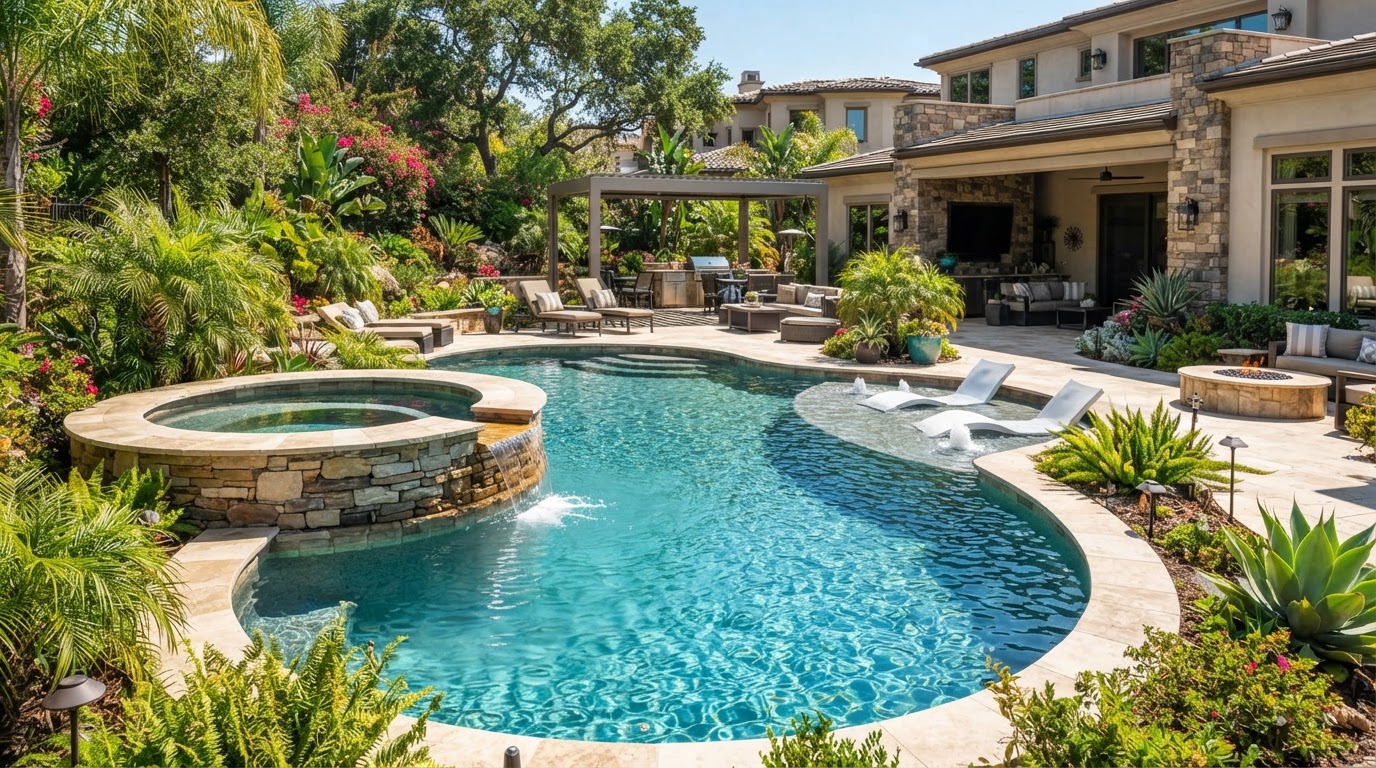
A pool and spa combo is a swimming pool and a spa built together as one integrated water feature. The spa is typically raised above the pool, with a spillway that flows into the pool. It is the most luxurious thing you can add to a backyard, and it is also one of the most complex.
Planning it well means thinking about the pool and the spa as one system from the very first sketch. The plumbing, the equipment, the decking, and the sightlines all have to work together. When they do, you get a backyard that feels like a resort. When they do not, you get a pool that works and a spa that sits empty.
What Is a Pool and Spa Combo?
A pool and spa combo is a single project where the pool and the spa are designed, plumbed, and built together. The spa is usually a raised body of water connected to the pool by a spillway. The two share a equipment pad, a heater, and a filtration system, which is more efficient than building them separately.
The spillway is the visual centerpiece. Water flows from the spa into the pool, creating a waterfall effect that looks great and sounds even better. The spa is heated independently so you can use it in winter while the pool is closed.
How Do You Choose the Right Pool Type?
The three pool types are gunite, fiberglass, and vinyl. Gunite is the most common choice for a pool and spa combo because it is fully custom. You can shape the pool and the spa to fit your yard and your vision. Fiberglass is faster and smoother but limited to manufacturer shapes, and a combo requires a matching spa shell. Vinyl is the most affordable but the least durable and the hardest to integrate with a raised spa.
For a combo, gunite is almost always the right choice. The ability to shape both the pool and the spa as one continuous structure is what makes the design work.
Where Should the Spa Go Relative to the Pool?
The spa is typically raised and positioned at one end or one corner of the pool. The spillway faces the main seating area so the waterfall is visible from the house and the patio. The spa should be close enough to the pool to share the equipment pad but oriented so it has its own sense of space when you are in it.
Think about the view from inside the spa. When you are sitting in the spa, you should see the pool, the yard, and ideally the house. The spa is a place to relax, so the view matters.
What Drives the Cost of a Pool and Spa Combo?
The cost is driven by the pool size, the spa size, the pool type, the decking material, the equipment, and the site conditions. A larger pool costs more. A raised spa with a custom spillway costs more than a flush spa. Premium decking like natural stone costs more than concrete. Site conditions like slopes, poor soil, or tight access add labor and materials.
The equipment is a major factor. A shared equipment pad with one heater, one pump, and one filtration system is more efficient than separate systems. But the heater needs to be sized to heat both the pool and the spa, and the plumbing needs to be designed for both.
How Do You Plan the Equipment Pad?
The equipment pad is where the pump, the heater, the filter, and the controls live. For a combo, the pad is shared, which saves space and cost. Plan the pad early in the design process. It needs to be accessible for service, away from the main seating area so the noise does not ruin the ambiance, and close enough to the pool and the spa to keep plumbing runs short.
The pad needs a dedicated electrical circuit, so plan the electrical early. A variable-speed pump is quieter and more efficient than a single-speed pump. A heat pump is more efficient for heating the pool, but a gas heater is faster for the spa. Many homeowners use both.
How Do You Light a Pool and Spa Combo?
Underwater LED lighting is what makes a pool and spa combo look spectacular at night. Plan the lighting during the design phase, not after. Color-changing LED lights in the pool and the spa create different moods. A light on the spillway highlights the water flow. Path lighting around the pool deck keeps the space safe and usable after dark.
Avoid one bright flood light. Layer the lighting so the pool glows, the spa glows, the spillway sparkles, and the path is lit. The effect should feel like a resort, not a parking lot.
How Long Does a Pool and Spa Combo Take to Build?
From the first design meeting to the first swim, a gunite pool and spa combo typically takes three to six months. Design takes two to four weeks. Permits take two to eight weeks depending on your jurisdiction. Construction takes eight to sixteen weeks depending on scope, weather, and site conditions.
Start earlier than you think you need to. If you want to swim by summer, start design in the fall. The permit and the construction timelines are the longest parts, and neither can be rushed.
Frequently Asked Questions
Can I add a spa to an existing pool?
Yes, but it is harder and more expensive than building them together. A retrofitted spa needs its own plumbing and equipment or a tie-in to the existing system. If you are planning a pool, build the spa at the same time.
Does a pool and spa combo cost more than a pool alone?
Yes, but the additional cost is less than building a separate standalone spa. Sharing the equipment pad, the plumbing, and the construction site saves money compared to two separate projects.
Can I heat the spa without heating the pool?
Yes. The plumbing is designed with separate loops so the heater can heat the spa independently. This is how you use the spa in winter while the pool is closed.
How much decking do I need around a pool and spa combo?
Plan for at least 4 to 6 feet of decking on all sides. More is better for lounge chairs and seating. The decking around the spa needs to be wide enough to sit and enter safely.
Do I need a fence around a pool and spa combo?
Yes, in most jurisdictions. Pool fencing is required by code in most areas for safety. Check your local building code for the specific requirements, including height, gate type, and latch rules.
Keep Reading
Plan your project
Use the Project Planner to get a plan outline for your project type, with steps and questions to ask.
Start Your Plan