
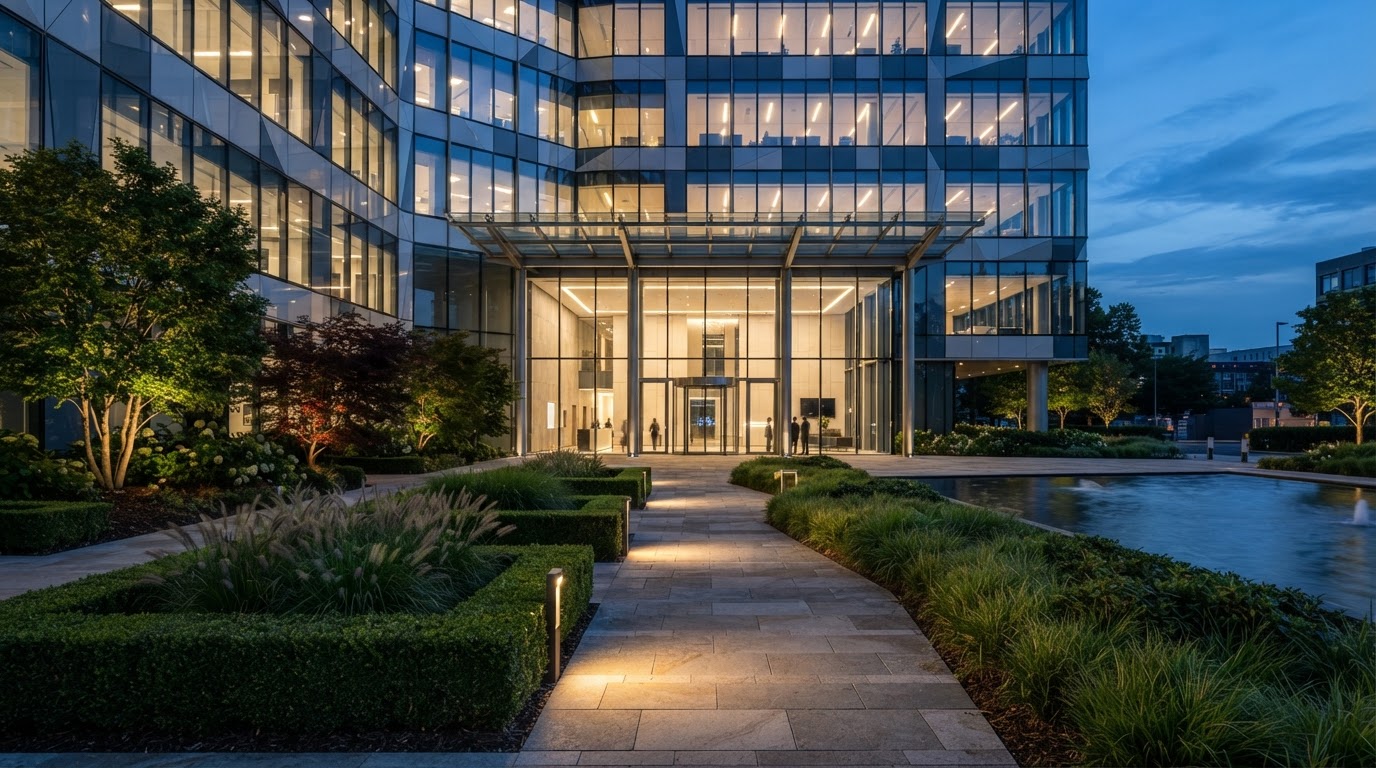
How to Plan Commercial Landscape Renovation Phasing Without Disrupting Operations
A commercial landscape renovation on a property that stays open takes phasing. Here is how to sequence the work, budget each phase, and keep the property running while the landscape gets upgraded.
Key Takeaways
- Phasing keeps the property open and revenue flowing. A full renovation that shuts down the property costs more in lost business than the renovation itself.
- The phase order follows the impact. Start with the areas that cause the least disruption and end with the areas that need the most, so the property degrades gracefully.
- Each phase needs its own budget, timeline, and communication plan. A renovation without phasing is a renovation without control.
- Temporary access and safety are part of every phase. A phase that blocks an entrance or creates a hazard is a phase that costs the business money.
How to Plan Commercial Landscape Renovation Phasing Without Disrupting Operations?
A commercial landscape renovation is a construction project on a property that stays open. The property has tenants, customers, employees, and deliveries that cannot stop. A renovation that shuts down the property costs more in lost business than the renovation itself. Phasing is how you renovate the landscape while the property keeps running, by breaking the work into stages that each disrupt a different part of the property at a different time.
The most common mistake is treating the renovation as one project. A full renovation done at once requires the whole property to be accessible to the crew and inaccessible to the users, which is not possible on an operating property. Phasing breaks the renovation into pieces that are each small enough to manage, each disruptive enough to be real, and each sequenced so the property never loses more function than it can absorb. The phasing plan is the project plan, and it is what separates a renovation that works from one that fails.
How Do You Decide the Phase Order?
The phase order follows the impact. Start with the areas that cause the least disruption to the property's operation, and end with the areas that need the most. The goal is that the property degrades gracefully, not all at once. A property that loses one entrance at a time can route traffic to another. A property that loses all entrances at once is shut down.
Consider the seasons. A phase that tears up the main entrance in the peak season costs more in lost business than the same phase in the off-season. Schedule the high-impact phases for the low-traffic periods, and the low-impact phases for the high-traffic periods. The phasing plan should account for the property's business cycle, not just the construction schedule, because the cost of disruption is a business cost, not a construction cost.
How Do You Budget Each Phase?
Each phase needs its own budget, because the costs are different. A phase that involves hardscape and irrigation costs more than a phase that is planting and mulch. A phase that requires temporary access routes costs more than one that does not. The budget should be broken down by phase, not lumped, because a lump budget hides the cost of each stage and makes it hard to decide whether to proceed, delay, or adjust.
Plan for the temporary measures. Each phase may need temporary walkways, temporary signage, temporary lighting, or temporary irrigation. These are costs that do not exist in a renovation of a closed property, and they are the costs that make phasing more expensive than a full shutdown. But they are also the costs that keep the property open, and the revenue from an open property is what justifies them. The budget should account for the temporary measures as part of the phase, not as an afterthought.
How Do You Communicate the Phases to Users?
Communication is part of every phase. The property's users, whether they are tenants, customers, employees, or residents, need to know what is happening, when, and how it affects them. A phase that surprises the users is a phase that generates complaints, lost visits, and bad will. A phase that is communicated in advance is a phase that the users accommodate, because they know what to expect.
Use signage, email, and direct communication to the affected parties before each phase starts. The communication should state what is changing, when, for how long, and what the alternative is. If an entrance is closed, where is the temporary entrance? If a walkway is blocked, what is the detour? The communication should be specific, not vague, because vague communication creates anxiety and specific communication creates confidence. The communication plan is part of the phasing plan, and it is what makes the phasing work for the people who use the property.
How Do You Handle Safety During Each Phase?
Safety is a requirement of every phase, not a preference. A construction zone on an operating property is a hazard, and the hazard has to be managed. Fencing, barricades, signage, and lighting separate the work zone from the user zone. A phase that does not separate the zones is a phase that risks injury, liability, and shutdown.
Plan the access routes for the crew and the users separately. The crew should not cross the user paths, and the users should not enter the work zone. Temporary walkways should be lit, stable, and clearly marked. The safety plan should be reviewed before each phase, because the hazards are different for each phase. A phase that involves excavation has different hazards from a phase that involves planting. The safety plan is the protection, and it is not the place to cut corners.
How Do You Transition Between Phases?
The transition between phases is the moment when one area opens and another closes. The transition should be clean, not gradual. The completed phase should be fully finished, cleaned, and open before the next phase starts, so the property always has more open than closed. A transition that overlaps, where one phase is not finished and the next is starting, stretches the disruption and confuses the users.
Plan a gap between phases for inspection, punch list, and cleanup. The gap is not wasted time. It is the time that ensures each phase is complete before the next begins, which is what keeps the property looking maintained throughout the renovation. A renovation that always has a finished area open is a renovation that looks like progress. A renovation that is always half-done everywhere is a renovation that looks like chaos. The transitions are what make the difference.
Frequently Asked Questions
How long does a phased commercial landscape renovation take?
It depends on the scope and the number of phases. A full property renovation phased over a year is common, with each phase taking a few weeks. The phasing extends the total timeline but keeps the property open, which is the trade-off. The timeline should be planned around the property's business cycle.
Does phasing cost more than a full renovation?
Yes, phasing costs more in construction, because of the temporary measures and the mobilization for each phase. But phasing costs less in total, because it keeps the property open and revenue flowing. The construction premium is justified by the business continuity, which is the whole point of phasing.
How do you keep tenants informed during a phased renovation?
With a communication plan that starts before each phase. Signage, email, and direct notice to affected parties, stating what is changing, when, and what the alternative is. Specific communication creates confidence. Vague communication creates complaints. The communication plan is part of the phasing plan.
What happens if a phase runs over schedule?
The phasing plan should include contingency time between phases, so an over-run does not cascade into the next phase. If a phase runs long, the next phase is delayed, not overlapped, because overlapping stretches the disruption. The contingency is the buffer that keeps the plan on track.
Can a property stay fully operational during a landscape renovation?
Yes, with phasing. Each phase closes a portion of the property while the rest stays open. The property never loses more function than it can absorb. The phasing plan is what makes full operation possible, by sequencing the work so the disruption is spread across time, not concentrated.
Keep Reading

Plan your project
Use the Project Planner to get a plan outline for your project type, with steps and questions to ask.
Start Your Plan